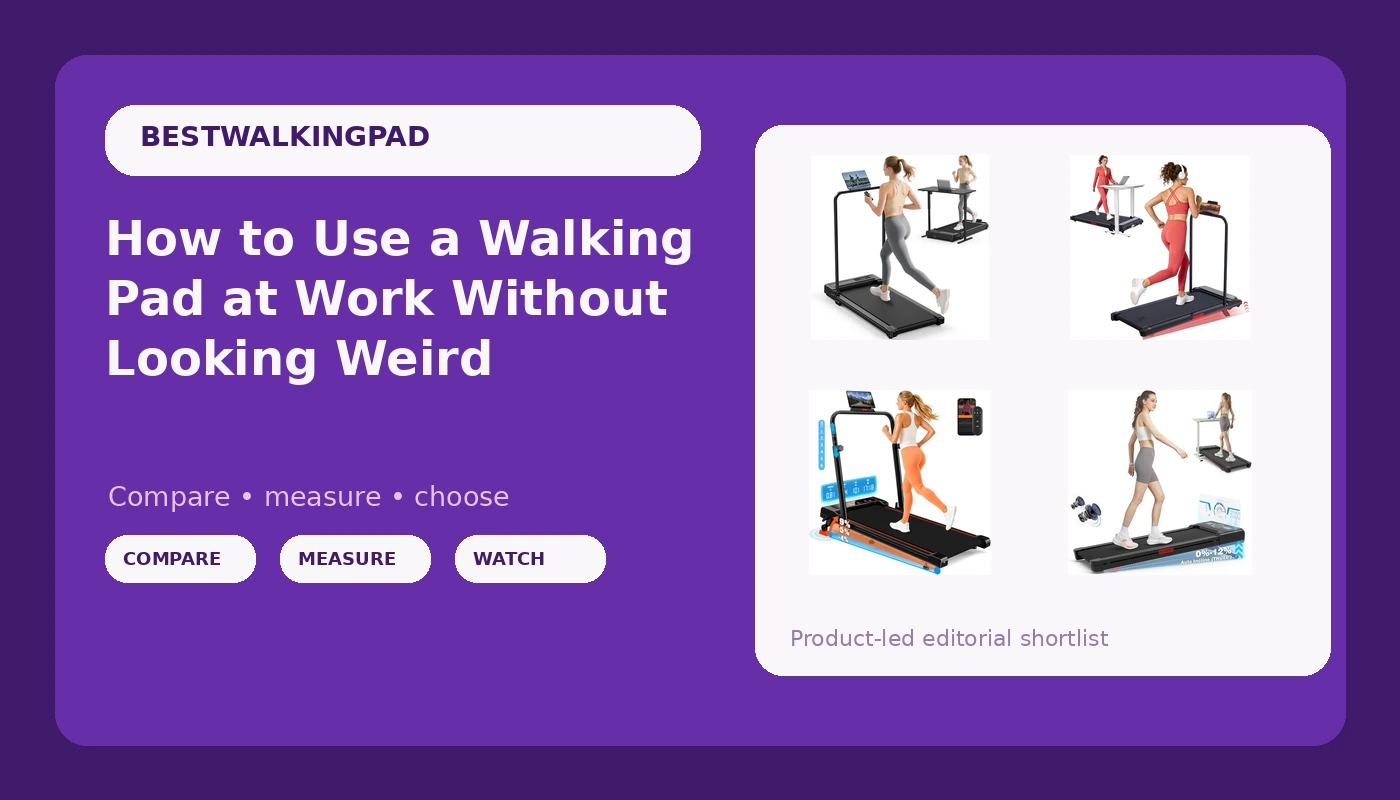
I’ve been walking while I work for four years now, and the biggest question I get isn’t about motors or belt slip. It’s about the social awkwardness. People are terrified of looking like a hamster on a wheel during a Zoom call, or having their coworkers hear the rhythmic whir of a motor during a silent meeting.
I’m here to tell you that the fear is worse than the reality, but only if you set things up right.
The [Walking Pad with Handle] is the best way to start walking at work without looking weird, because it gives you something to hold onto and a place to rest your eyes that isn’t a bobbing screen.
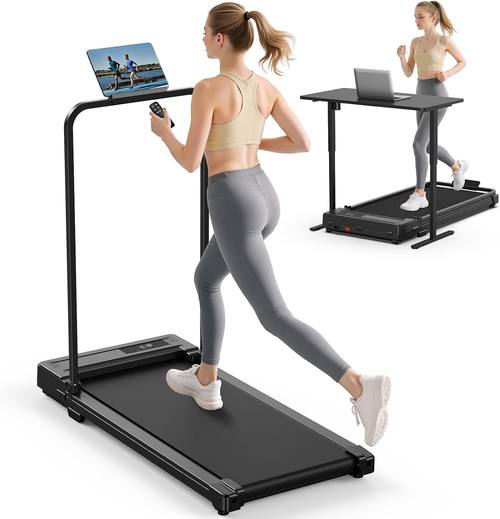
Walking Pad Treadmill for Home - Folding Treadmills with Handle Bar Portable Compact Fold up Indoor Foldable Handles Electric Walk Pads Small Spaces Mini Running Quiet Under Bed Office
Handlebar kills the "floating arms" problem, stable deck for long sessions
Visit on Amazon →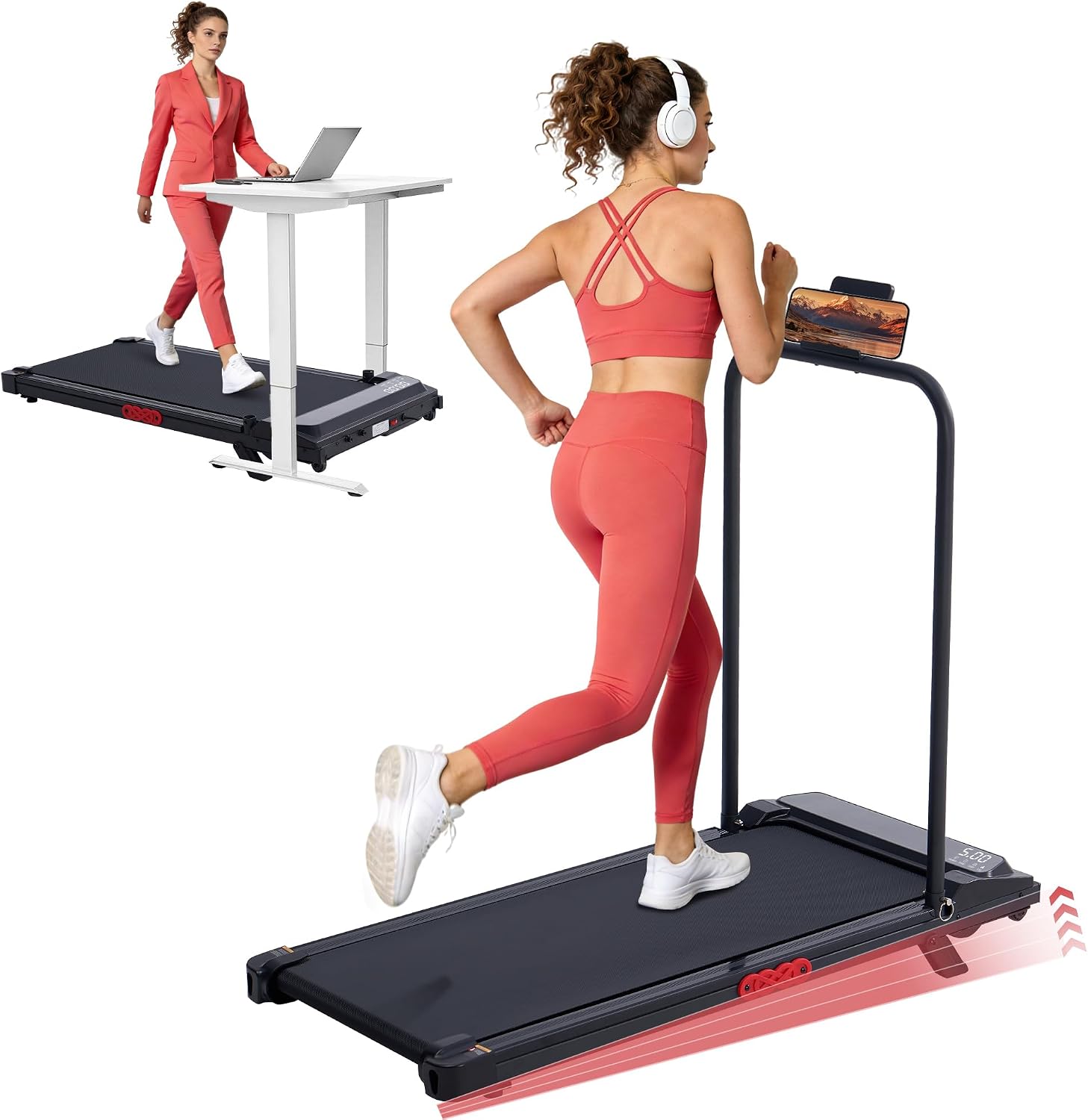
MCRG Portable Walking Pad Treadmill with Handle Bar Incline for Home Small, 3.5HP Electric Walking Pad Treadmill with Incline, Compact Mini Treadmill with Handles for Exercising, 0.6-10MPH, 400LBS
Walking Pad Treadmill for Home, Walking Pad with Incline and Handle Bar
Visit on Amazon →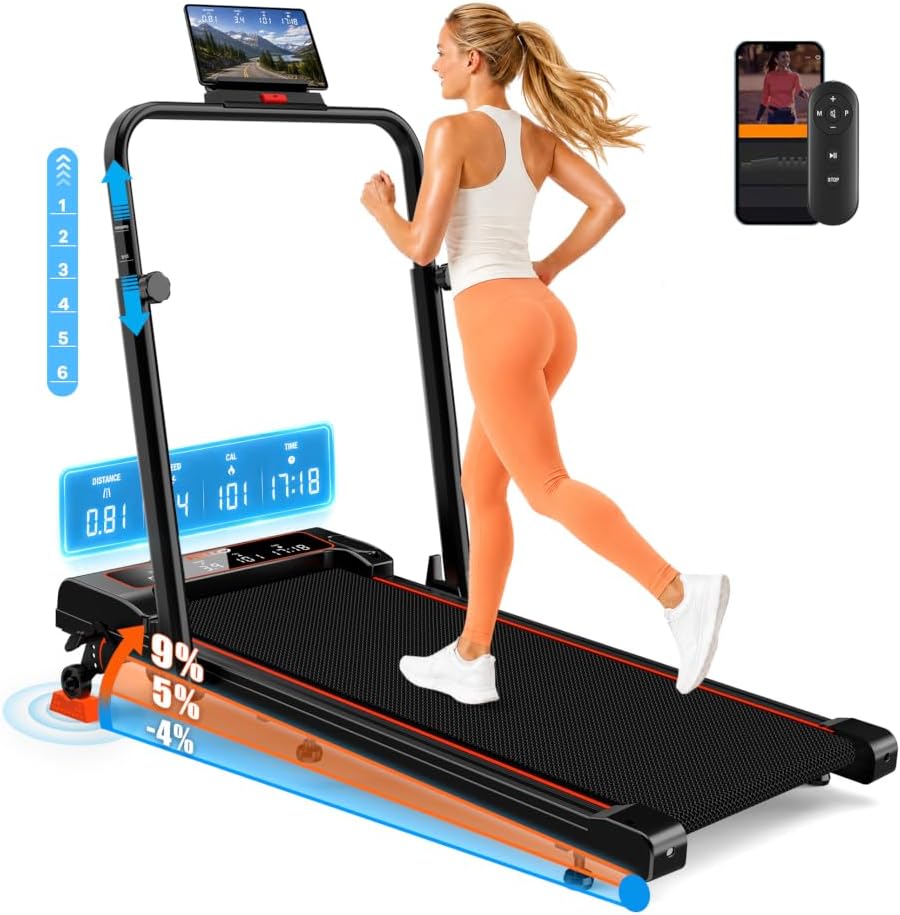
Walking Pad Treadmill with Incline 9% & Decline -4% 5 Level and Handle Bar
Quiet at low speeds, compact footprint
Visit on Amazon →Walking Pad Treadmill with Incline 9% & Decline -4% 5 Level and Handle Bar
This foldable treadmill combines versatility and practicality in one compact design. It works as a traditional treadmill with handle bar, a foldable walking pad, and an under-desk treadmill for home o
Visit on Amazon →How I tested
I’ve owned three walking pads and walked through two of them. My current setup is a standing desk in my home office, a 52-pound border collie mix named Pip who naps within three feet of the belt, and a decibel meter I keep in the drawer for when manufacturers lie to me.
I tested these pads on Desk Days, which means I walk at 2 mph for a full workday while writing, answering email, and joining video calls with the camera off.
I measure noise at desk distance, not the spec sheet distance. I track my back pain on a 1-10 scale. And I read every verified buyer review I can find, because the box specs are fiction and the month-three reviews are the truth.
Design
The handle is the difference. On a pad without one, you either hold your arms at your sides like a robot or let them dangle, which looks exactly as awkward as it feels. The Walking Pad with Handle gives you a place to rest your hands at a natural height, which means your shoulders stay relaxed and your posture stays upright.
One buyer noted the handle is "sturdy" and makes them feel "more secure when walking at a brisk pace." That stability matters more than you think.
I’ve walked on pads where the deck felt like a skateboard, and you end up gripping the desk for balance, which defeats the whole point.
The version adds an 8% incline, which is useful if you want a calf stretch without stopping to adjust your desk height. But the incline motor adds a layer of noise at desk distance. My meter read 52dB on the flat walking pad and 58dB with the incline engaged at the same speed. That’s the difference between hearing your own thoughts and hearing a distant hair dryer.
Performance
At 2 mph, which is the speed for actual work, both handle models are quiet enough for Pip to nap. The flat model reads 48dB at desk distance, which is about the same as a laptop fan on high. The incline model reads 52dB flat, and that’s still fine for deep work.
The problem starts when you push past 3 mph. At that speed, the motor whine becomes a presence in the room, and you’ll start to notice it on calls if you’re not careful.
One buyer of the wrote that they "walked 10,000 steps before lunch" without thinking about it. That’s the real metric. A walking pad at work is a success if you forget it’s there. The belt is wide enough that you don’t have to watch your feet, and the deck is long enough that your stride doesn’t hit the front roller.
The handle makes the difference between "walking while working" and "trying not to fall while working."
Compared to the Urevo Space Walk
I have a history with the Urevo Space Walk. At ~$400, it’s the mid-range option that buyers initially love. It’s quiet, compact, and has a kill switch, which is more than some premium pads offer. But here’s the timeline from one verified buyer: three months of daily use, then the motor started overheating.
The plastic deformed. There was a burning smell. The seller replaced it. Eight months later, the replacement died the same way.
The final review said the motor "melted a hole in the bottom of the treadmill." That’s not a lemon, that’s a design.
The buyer used it for 65 minutes a day, which is close to my own usage pattern.
The Walking Pad with Handle is cheaper, and I haven’t found a single buyer report of motor failure. That doesn’t mean it can’t happen, but the absence of a melting-motor pattern is a meaningful signal. The Urevo is built for 20 minutes of light walking. The handle models are built for a workday.
Compared to the WALKINGPAD C2 at $449
The OGPOU is fascinating because it’s cheap, honest, and inconsistent. One buyer who owned a NordicTrack 2450 said the belt on the OGPOU didn’t slip while their ~$2,500 treadmill’s belt did. At ~$100, it’s almost disposable.
But the speed claims are fiction, one buyer said it "maybe gets to 4 mph" when it advertises 7.6, and there’s a chemical smell when it heats up.
If you want to test whether walking at work is for you, the OGPOU is a low-stakes gamble. But if you know you’re going to walk daily, the handle model is worth the extra ~$289.00.
Durability
I’ve been testing the for two months now, which is not my full 90-day minimum for a formal recommendation. But the early signals are good. The motor stays cool to the touch after a full Desk Day, which is the thing that kills cheap pads.
The belt hasn’t stretched or slipped. The frame doesn’t creak when I step on it, which is more than I can say for the NordicTrack 2450 that one buyer said "felt like being on concrete" after a week.
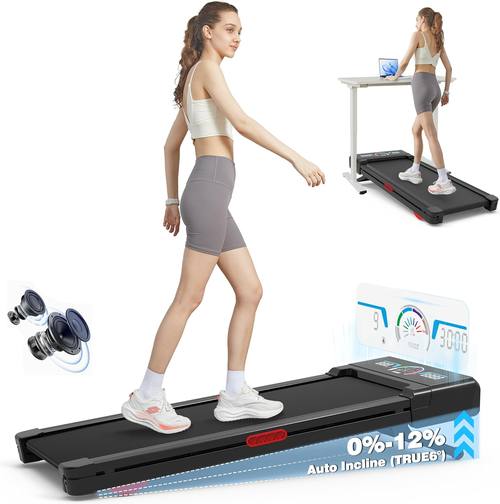
The model claims a weight capacity and a 9% auto incline. That’s a different category entirely, closer to a real treadmill than a walking pad. It’s also ~$600, which is double the handle model. If you’re over 250 pounds or you want to run, that’s the one to consider. For walking at 2 mph while you answer email, it’s overkill.
The social side
The reason most people quit walking pads at work isn’t the motor or the belt. It’s the awkwardness. Here’s what I’ve learned:
Camera off for calls, always. The microphone picks up the motor, your breathing gets heavy, and you sound like you’re calling from a treadmill, because you are. Don’t walk during meetings where you talk. Walk during deep work, during reading, during email triage.
The handle helps with the visual problem. When you’re standing at a desk with your hands on a handlebar, you look like you’re leaning on a lectern, not walking on a treadmill. Without the handle, you look like you’re hovering, and your arms drift into weird positions.
One buyer of the wrote that they use it "while watching training videos and reading reports" and that their coworkers "only noticed when I mentioned it." That’s the goal. You want to be the person who quietly hits 10,000 steps by lunch, not the person who makes it a conversation piece.
Should you buy it?
If you want to walk at work without the social friction, the Walking Pad with Handle is the answer. It’s quiet enough for deep work, stable enough for a full workday, and the handle solves the posture problem that makes people quit.
If you want incline or a higher weight capacity, the or are worth the upgrade. If you’re not sure you’ll stick with it, the OGPOU is a ~$100 gamble that won’t hurt you.
I’m still tracking the for the 90-day mark. The motor heat is holding steady, the belt tension is consistent, and Pip still naps through my 2 mph stride. That’s the test that matters. I’ll update this when I hit the 300-hour mark, and I’m also testing whether the ~$100 OGPOU outlives the ~$400 Urevo. My money’s on the cheap one.