Related: Best Walking Pad for Small Apartments: Folding, Storing, and Actually Using It
A walking pad with incline sounds like the upgrade you should take. It is also the fastest way to make a pad unusable at a standing desk. Raise the front of the deck a few degrees and you raise the height your feet start from, shorten your natural stride, and push your knees closer to the underside of a desk you already own. I spent nine years sitting ten hours a day as a backend engineer, then herniated my L5 at 31, and I have been rebuilding my workday around movement ever since.
What follows is not a spec-sheet recital. It is the four pads I would put in front of a remote worker with a normal desk, a normal tolerance for noise, and a budget that stops well short of gym equipment. Under-desk treadmills are not treadmills, and comparing them to the machine at your gym is how people get hurt. No running here. Walking, at a cadence you could hold on a phone call.
Three of these four fold. Two of them incline. One of them is the flat, quiet, boring choice I would still buy first for a desk day. The right answer depends on whether you want to walk while you answer email or walk while you watch a show, and those are different products with different geometry.
Best Overall: UREVO Smart Walking Pad
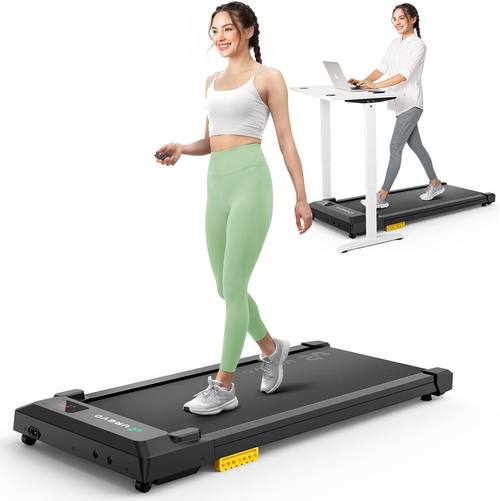
This is the one I would hand most people first, and the reason is that it does not incline. The listing pitches double shock absorption, quiet operation, plug and play setup, and a workout app with track insights plus a MIIT mode, with control from either a remote or the app.
Take those claims one at a time. Shock absorption matters more than it sounds, because the deck of an under-desk pad is short and the cushioning is what keeps a two-mile walk from feeling like a shuffle on concrete. Quiet operation is the claim I trust least from any brand, because it is almost always quoted at idle rather than at walking speed. Ask for a figure at your working pace, or buy somewhere with a real return window.
The controls are the part I actually care about. This pad gives you two ways to change speed, and that is the correct answer to a remote that needs a clear line of sight. My own remote gets used dozens of times a day, and every one of those presses is a chance for a beam to be blocked by a coffee mug. The app is a bonus, not a requirement, and that distinction matters: an app that demands an account before it will let you nudge the speed is a worse remote, not a better one.
Plug and play is worth saying out loud in this category. Some pads arrive needing assembly, firmware fussing, or a belt that needs to be re-centered before the first walk. A pad you can unbox and stand on the same afternoon is a pad you will still be using in February.
Best for Folding: WalkingPad P1 Foldable Walking Pad
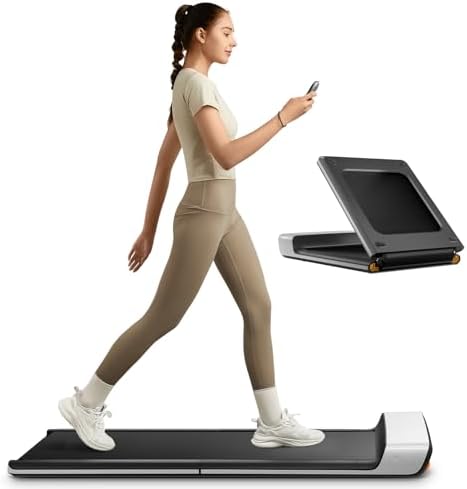
The P1 is the storage answer. It folds, and it is built around a compact footprint, which is the whole argument for this pad. If your apartment has a hallway you can walk down but no corner you can dedicate to a treadmill, folding is not a gimmick, it is the feature that decides whether the pad exists in your life at all.
Here is the honest trade. A hinge is a moving part, and a moving part is a place where a deck can develop a rattle. Folding also usually means a shorter and narrower walking surface, which is fine at a desk pace and uncomfortable if you try to stretch out. Fold it for storage, not for walking.
I would treat the fold as a storage feature and judge everything else normally. Does the folded unit slide under a bed or stand in a closet without scraping the floor? Do the wheels roll on hardwood, or do they leave marks? Those are the questions that separate a folding pad you keep from a folding pad you resent. Wheels that scrape are one of my least favorite things about this entire product category, and they are the first thing I check on any folding design.
If you work at a desk you lower and raise every day, a compact folding pad also solves a second problem: you can stow it during meetings where you need to be seated and still look composed on camera.
Best With Incline: Walking Pad Treadmill with Incline, 3.0HP Quiet Motor
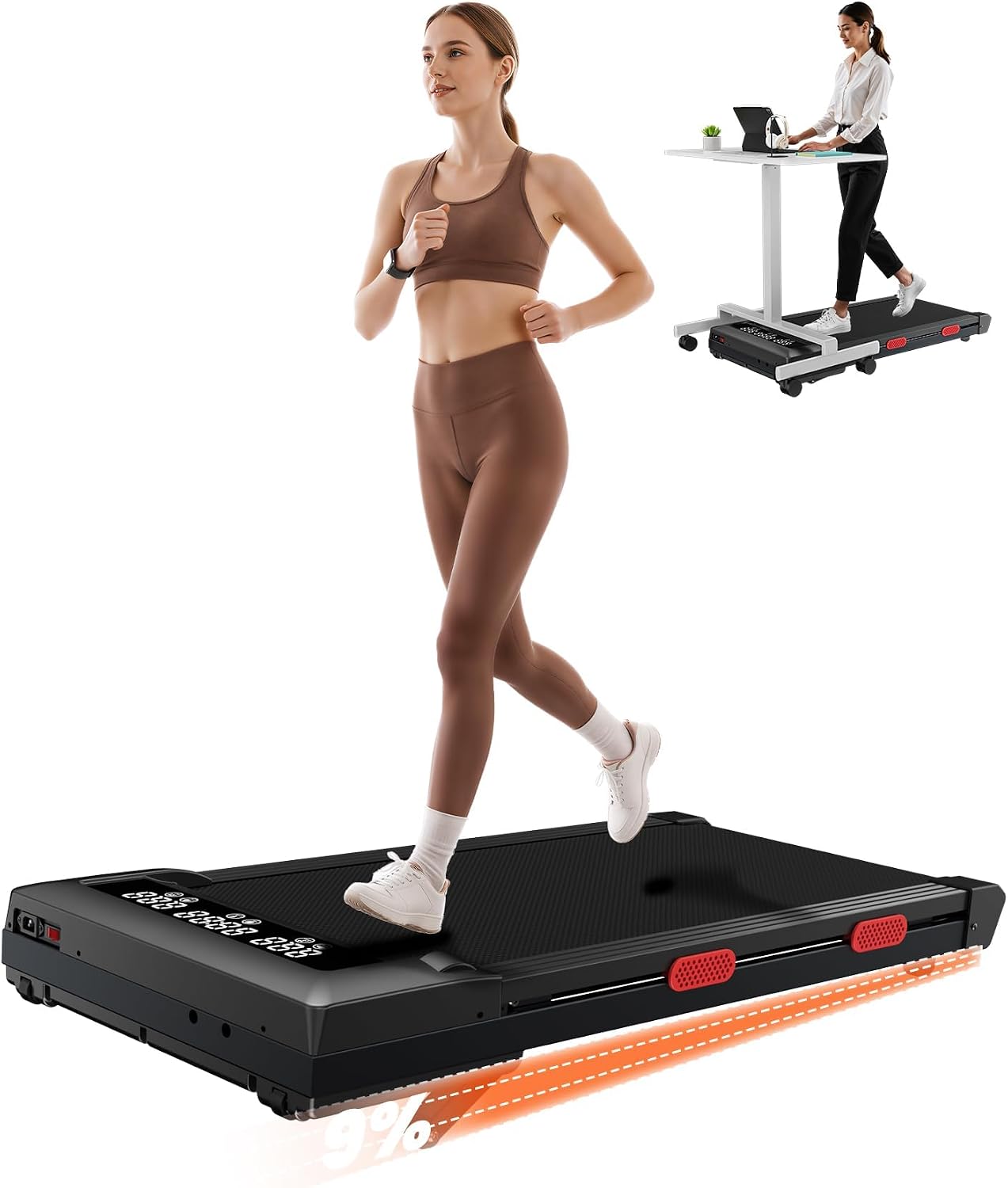
This is the most capable pad of the four on paper: an incline, a listed 3.0HP quiet motor, a folding portable design, a stated 300 pound capacity, a handle bar, a remote, and an LED display. It is also the pad most likely to be bought for the wrong reason.
Start with the motor figure. Horsepower in this category is usually quoted as a peak number, and peak versus sustained HP is the difference between a pad that holds two miles per hour for an hour and a pad that sags when the belt warms up. A bigger number on a listing is not a promise of sustained output. What a company does with its warranty tells you more about the motor than the spec line does. A brand that trusts its motor backs it for three years.
The incline is the real story. It raises the front of the deck, which raises the height your feet start from and changes your cadence into something closer to a slow uphill walk. That is genuinely useful for NEAT, and genuinely annoying if your desk is already near its top setting. Measure your clearance before you buy this one, not after.
The handle bar changes the category, too. A pad with a bar is no longer a pure under-desk device. It wants floor space in front of it and it invites you to hold on, which is a different posture and a different safety profile. If you want a bar, buy this. If you want to type while you walk, the bar is in the way.
Best Budget Pick: Treadmills for Home Walking Pad with Incline Handle Bar Foldable
This is the least expensive of the four here, and it carries the same headline features as the pad above: an incline, a handle bar, and a folding frame. That combination at the bottom of the price range is exactly where I get cautious, and it is also exactly where a lot of buyers should be looking, provided they know what they are trading.
What you are trading is refinement, not capability. At this price, expect a simpler console, a plainer remote, and less attention paid to the small things: how smoothly the belt tracks, whether the deck wobbles as you approach a brisk walk, whether the incline locks positively or drifts. None of those are automatic failures. They are the things that separate a pad you use for three years from one that ends up under the bed.
My rule for budget pads is simple. Walk slowly, keep your hand near the bar, and never push the top speed just because it is there. A cheap pad at a moderate pace is a good deal. A cheap pad at its ceiling is a risk you do not need to take for a step count.
What I check before I recommend any pad
The spec sheet is the last thing I look at. The first things are the ones that decide whether the pad survives daily use.
- Remote behavior. Does it work without line of sight, and can you change speed without unlocking a phone or signing into an app? This is the single most-used control on the machine.
- Auto-stop. A pad that keeps moving when you step off is a safety problem, not a convenience.
- Deck height and belt width. Deck height decides whether the pad fits under your desk at a height you can actually type at. Belt width decides whether your feet stay on it when you look away at a screen.
- Noise at walking speed. Idle decibel figures are marketing. Walking-speed noise is the number that determines whether you can take a call while moving.
- Warranty length. Three years on a motor means something. Ninety days on everything means the company knows what tends to fail.
- Wheels and folding hardware. Scraped floors and rattling hinges are the two most common long-term complaints in this category.
I also check the pair, not just the pad. A walking pad without a desk that adjusts is a very expensive footrest. If your desk does not go high enough for you to stand and type, buy the desk first.
Analysis: where these four actually differ
The four pads split cleanly into two groups, and the split is geometry, not price.
The flat group, the UREVO and the P1, is built for a desk day. Deck height stays constant, the walking surface stays level, and your posture stays close to normal standing. The UREVO wins on controls and on the flat, cushioned deck. The P1 wins on storage. If your goal is to walk two miles an hour while answering email, this is the group you should be shopping in.
The incline group, the two pads with handle bars, is built for a session. An incline asks more of your calves and hips, which is good for NEAT and bad for multitasking, because your cadence and your balance both change. The handle bar pads also take up floor space in a way the flat pads do not, and they nudge you toward holding on, which is closer to gym behavior than desk behavior.
Noise follows the same split. A flat pad at a desk pace is the quietest configuration you can buy in this category. Add an incline and a bigger motor and you add load, and load is what makes a motor audible. If your test is whether a client can hear the pad on a call, buy flat.
Then there is the question nobody puts on a listing: what happens in month seven. In my experience the remote battery goes first, the belt needs a re-center second, and the app gets abandoned third. That is why I weight the remote and the warranty so heavily in everything above. A pad with a great app and a bad remote is a pad you will stop using, and a pad you stop using is a footrest with a power cord.
Walking pad reference table
This is the same table I keep for myself, sorted by what each pad is actually for. Everything in the notes column comes from the product listing, not from a number I made up, and you should treat the motor and capacity figures as manufacturer claims until you confirm them at the source.
| Product | Best for | Listing highlights | Controls | Price |
|---|---|---|---|---|
 Visit on Amazon → UREVO Smart Walking Pad |
Desk day, flat deck | Double shock absorption, quiet operation, app with track insights and MIIT mode, plug and play | Remote or app | $169.99 |
 Visit on Amazon → WalkingPad P1 Foldable Walking Pad |
Small spaces and storage | Folding frame, compact under-desk design | Not stated in the listing title | Check current Amazon price |
 Visit on Amazon → Walking Pad Treadmill with Incline |
Incline walking with support | Incline, 3.0HP quiet motor, folding portable design, 300LB capacity, handle bar, LED display | Remote control | $199.99 |
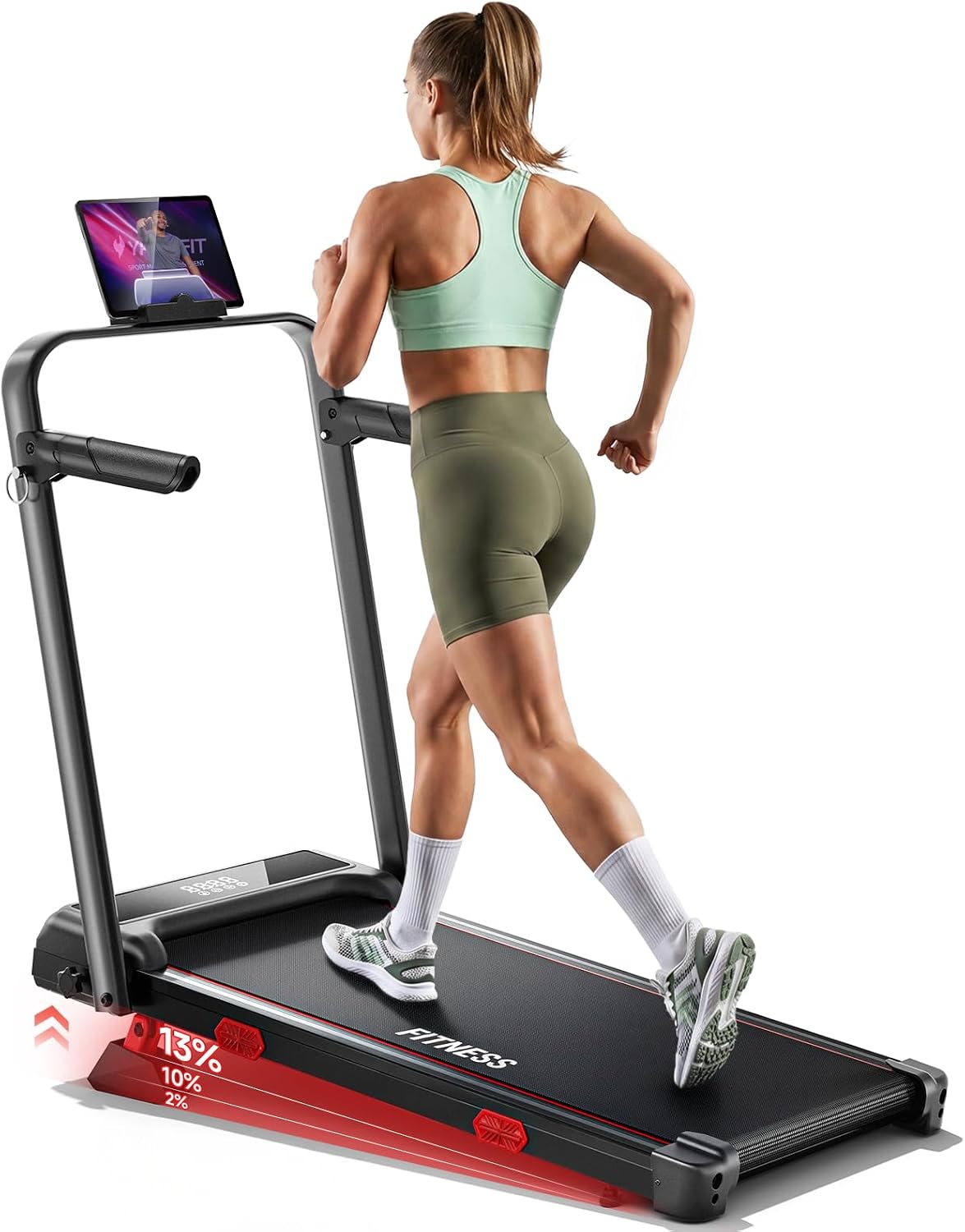 Visit on Amazon → Treadmills for Home Walking Pad with Incline |
Tight budget, incline option | Incline, handle bar, foldable | Not stated in the listing title | Check current Amazon price |
Should you buy the UREVO Smart Walking Pad?
Yes, for most desk workers. It is the flat, cushioned, quiet-by-design option of the group, it gives you a remote and an app so you are not locked into one control method, and plug and play means you will actually start using it instead of leaving it in the box for a weekend. The two things I would confirm before ordering are the walking-speed noise figure and whether the app lets you change speed without creating an account. If both answers are reasonable, this is the pad I would buy for a workday.
Should you buy the WalkingPad P1?
Buy it if storage is your binding constraint. A folded pad that lives in a closet gets used far more than a better pad that has nowhere to live. Skip it if you want a wide, stable walking surface for long sessions, because a folding, compact deck is a compromise on both counts. This is a space decision more than a performance decision.
Should you buy the incline pad with the handle bar?
Buy it if you want an incline and you have the floor space and the desk clearance to support it. Measure your under-desk height first, because an incline raises the deck and that number is unforgiving. Buy it with the understanding that a handle bar makes this a session machine, not a typing machine, and that the motor figure on the listing is a claim to verify rather than a guarantee of sustained output.
Should you buy the budget incline pad?
Buy it if the price is the deciding factor and you are disciplined about pace. It gives you the incline, the handle bar, and the folding frame at the bottom of this group. Go in expecting a simpler console and less polish, keep your speed moderate, and judge it on the remote, the auto-stop, and the warranty rather than on the spec line. That is how a budget pad earns its place instead of becoming a footrest.