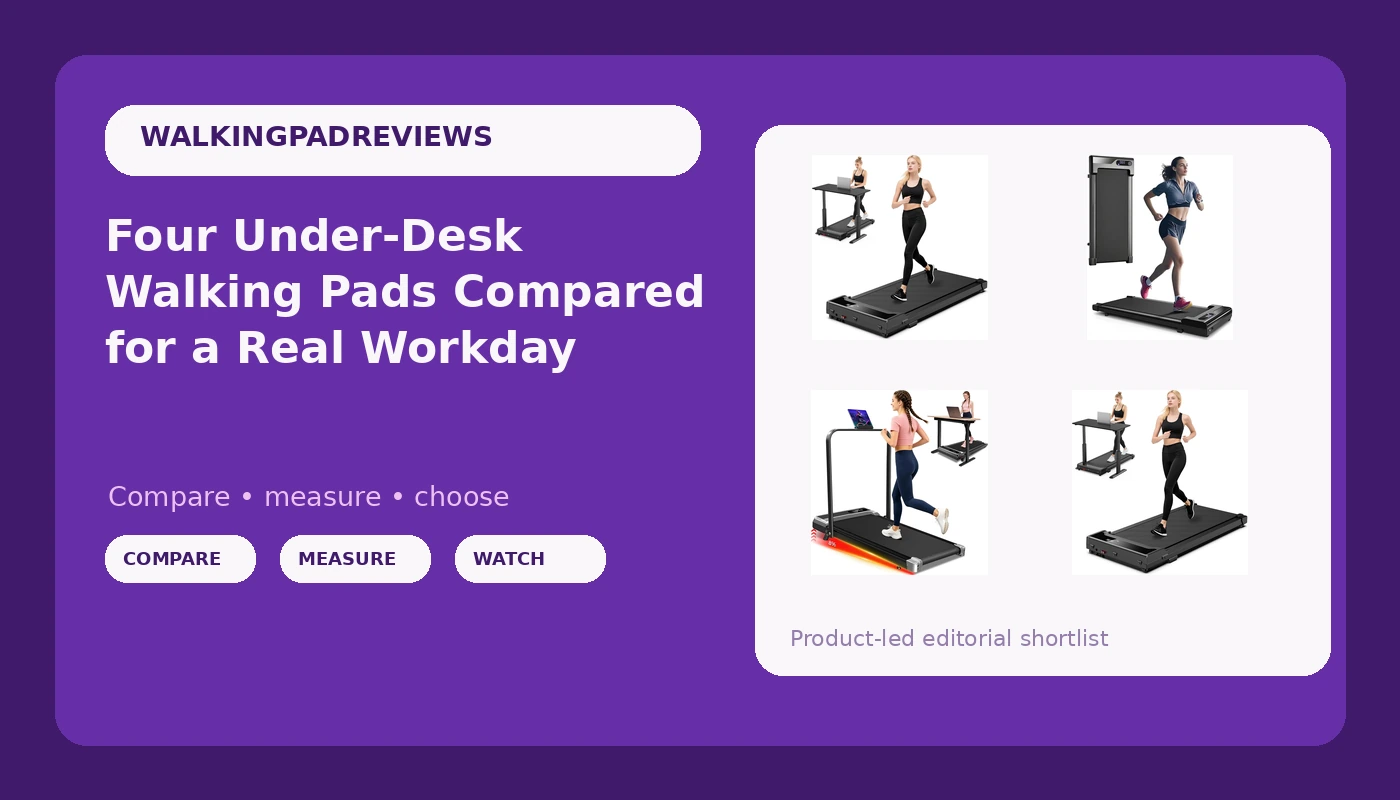
I herniated my L5 disc at 31 after nine years of sitting ten hours a day as a backend engineer. My physical therapist gave me a simple deal: move every hour or pay for it later. That deal turned my home office into a lab, and it is why I run an under-desk walking pad comparison the way I would compare medical equipment rather than gym gear. The four pads below all live in the same budget neighborhood and all promise the same thing: quiet, compact, remote-controlled walking while you work. Two of them are near-identical slim units with a 0.6 to 4.0 mph range and a 265 lb capacity, one is a mini pad built for tight apartments, and one adds a handle bar and a 3.0HP motor claim. Here is how they actually differ, and who each one is for.
Related: Walking Pad Belt Width: Why a Narrow Deck Changes Your Gait
For most desk workers, the honest pick is one of the two slim 265 lb pads, because they do the only job a walking pad has to do: hold 2 mph quietly under a standing desk. The handle bar model is the better buy if you want something to hold while you walk, or if you are close to the 265 lb limit.
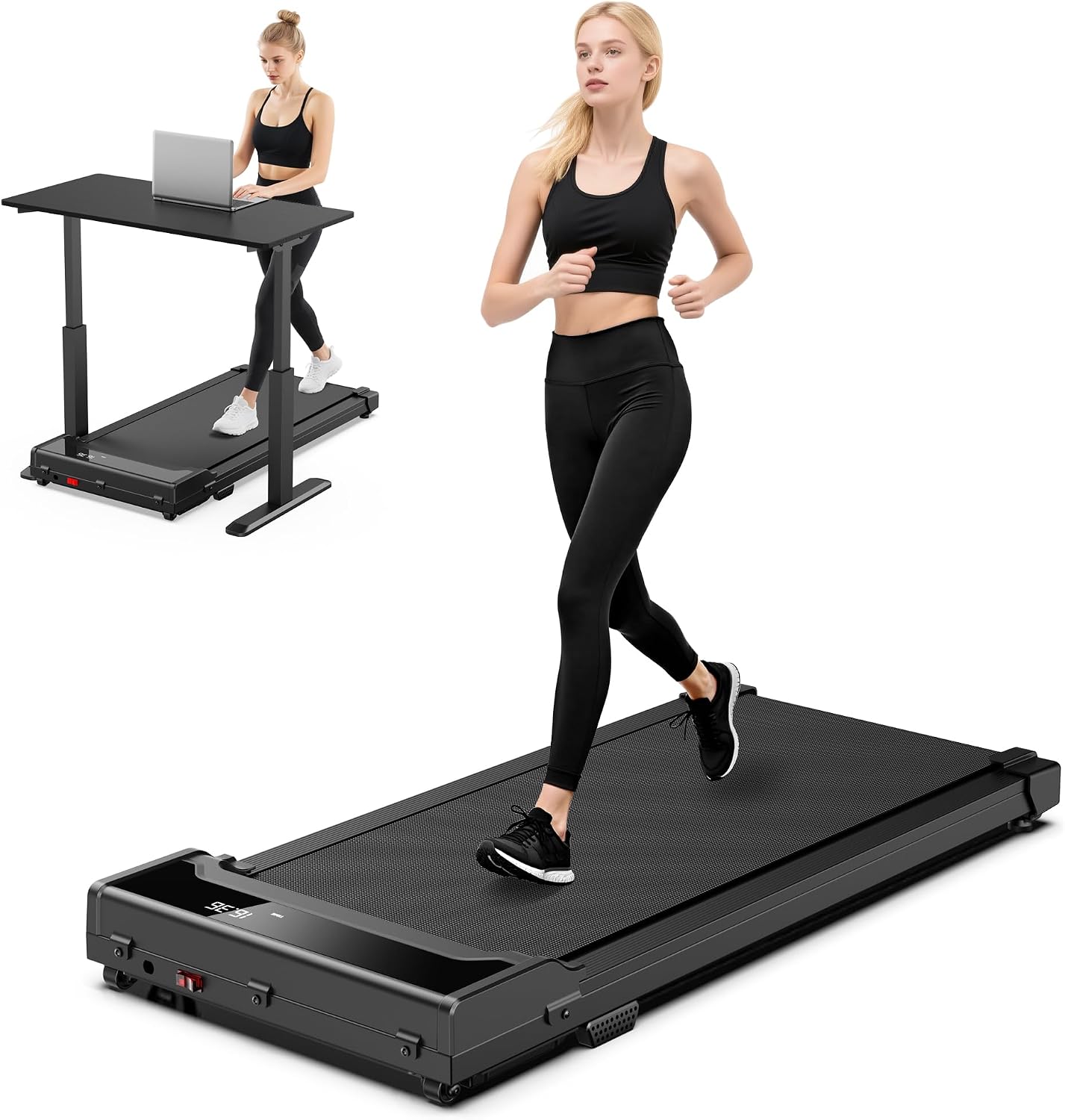
Walking Pad Treadmill for Home - Under Desk Walking and Running with Remote Control Portable Electric Machine Adjustable Slim Compact with 0.6-4.0MPH Modes Max up 265 Lbs for Home Office
The purest under-desk shape here, with a 0.6 mph floor that makes the first ten minutes of a workday genuinely gentle
No handle, so nothing to steady yourself with on the way on or off
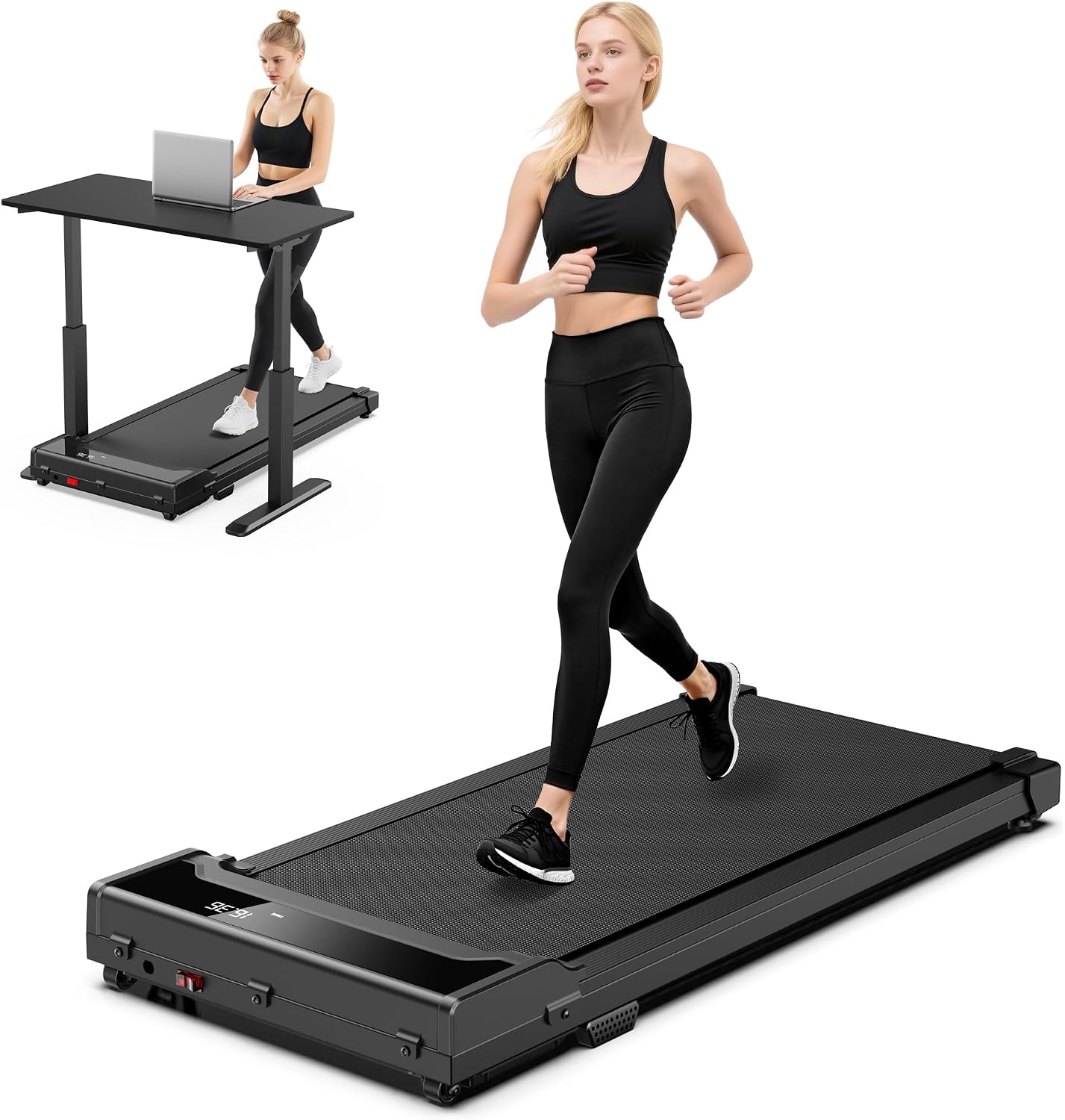
Walking Pad Treadmill for Home - Under Desk Walking and Running Portable Electric Machine Adjustable Slim Compact with 0.6-4.0MPH Modes Max up 265 Lbs with Remote Control for Home Office
Same class as the pad above, with the remote called out as part of the package rather than an afterthought
If you already own the other slim pad, there is nothing here that justifies a second one
Walking Pad Treadmill for Home - Under Desk Treadmills Portable Mini Compact Walk Pads for Small Spaces Office Indoor Apartment Floor Flat Running Machine with Remote Quiet Lightweight
Built for the apartment case first: mini, lightweight, and easy to slide out of the way when guests arrive
A mini deck is a compromise, and this is the pad most likely to feel narrow at a brisk walk
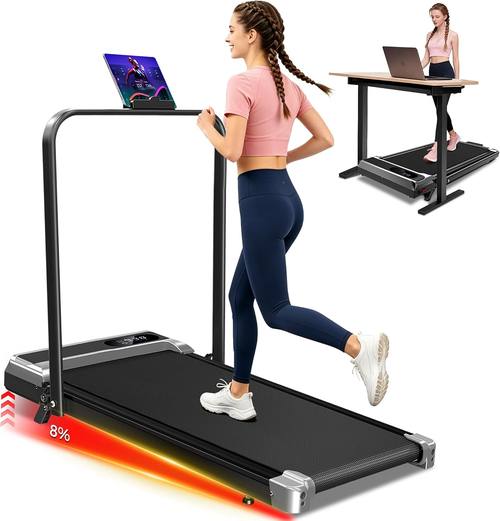
Walking Pad with Handle Bar, 3.0HP Low Noise Foldable Walking Pad Treadmill, Compact Treadmills for Home Small Spaces, Walking Running Machine, Lightweight Treadmills 300LBS Capacity
The only one of the four with a handle bar, a higher capacity, and a foldable frame, which makes it the safest choice for anyone unsteady on a moving belt
The handle bar is exactly what you do not want if your only goal is to slide the pad fully under a desk and forget it
Prices and availability were captured from Amazon Creators API and may change.
What these four pads have in common
All four are under-desk machines, not treadmills, and that distinction matters more than any spec on the page. They are designed for walking speeds, they are meant to sit under a height-adjustable desk, and they all ship with a remote so you can change speed without bending down. Three of them are slim, low-profile decks. All of them fold or stow in some form, because the manufacturers know that storage is the real competition: a pad that cannot disappear under a bed or a couch ends up as a footrest.
The capacity numbers cluster too. Three pads are rated to 265 lbs and the handle bar model is rated to 300 lbs. If you are anywhere near the top of a 265 lb rating, the higher-rated unit is the one to look at, not because the others will collapse, but because a motor working at its ceiling runs hotter and louder than one with headroom.
The 0.6 to 4.0 mph question
Two of these pads advertise a 0.6 to 4.0 mph range. That range is the correct one for this category, and I want to be blunt about what it means. At 0.6 mph you are shuffling, which is exactly what you want for the first few minutes while your hands are still on a keyboard. At 2 mph you are walking in a way that counts as NEAT, the non-exercise activity that adds up over a workday. At 4 mph you are moving fast enough that typing gets unreliable, and 4 mph is not running, no matter what the listing title says.
I do not run on walking pads, and I do not recommend it. There is no handle on three of these four units, the deck is short, and the safety profile is completely different from a gym treadmill. If you want to run indoors, buy a treadmill. If you want to walk forty minutes during a meeting, buy one of these.
The remote is the feature nobody tests
I use my remote roughly forty times a day. I bump speed down when I take a call, up when I am reading, and off when I stand up for water. A remote that needs a clear line of sight to the console turns that into a small daily irritation that compounds.
Every pad in this comparison ships with a remote, and the difference between a good and bad one is not visible in a product photo. Look for two things in buyer questions and reviews: whether the remote works from a normal seated or standing position, and whether the pad will still run if the remote battery dies. A pad that only responds to its remote and has no console buttons is a pad with a single point of failure. The mini apartment pad and the two slim pads all rely heavily on the remote, so that battery is the first thing I would replace on day one rather than month six.
Handle bar or no handle bar
The handle bar model is the odd one out and the easiest to recommend for a specific buyer. A handle bar changes the way you get on and off the belt, and that is the moment most walking pad injuries actually happen: a half step onto a moving deck while your chair is still behind you. If you have balance issues, if you are walking at the top of the speed range, or if you simply want to hold on while you answer email, this is the one.
The trade-off is real. A handle bar adds height, and height is what determines whether a pad fits under a desk at standing height. If your desk tops out lower than you would like, a handle bar model can put your knuckles into the underside of the desk. Measure your desk's maximum height before you choose this one, not after.
Belt width, deck height, and barefoot walking
Belt width is the spec I care about most after noise, and none of these listings make it easy to compare. A narrow belt is fine at 1.5 mph and genuinely annoying at 3 mph, because you start steering instead of walking. The mini pad is the most likely to feel tight, and the two slim pads sit in the middle. If you plan to walk barefoot, belt texture and deck height matter more than width: a low deck is easier on the ankles, and a smooth belt is kinder to the soles of your feet than a heavily textured one.
Deck height also decides your desk math. Add deck height to your own height and compare it against the top of your desk. Most people need a desk that rises to somewhere in the standing range for their body, and a pad that adds two inches of deck can be the difference between typing comfortably and typing with your shoulders up around your ears.
Why quoted decibel ratings mean nothing
Every listing in this category says quiet. Almost none of them tell you the conditions of the measurement. A pad measured at idle, with nobody on the belt, is a completely different machine from a pad measured at 3 mph with an adult walking on it. I take my readings at ear height while walking, because that is where the sound actually lands during a Zoom call.
The practical version: a pad with a cheap motor and a thin deck transmits footfall into the floor, and floor transmission is what your downstairs neighbor hears. If you live above someone, the pad you choose matters less than the mat you put under it. A dense rubber mat under any of these four does more for noise than paying for a quieter motor ever will.
Motor claims, capacity, and safety
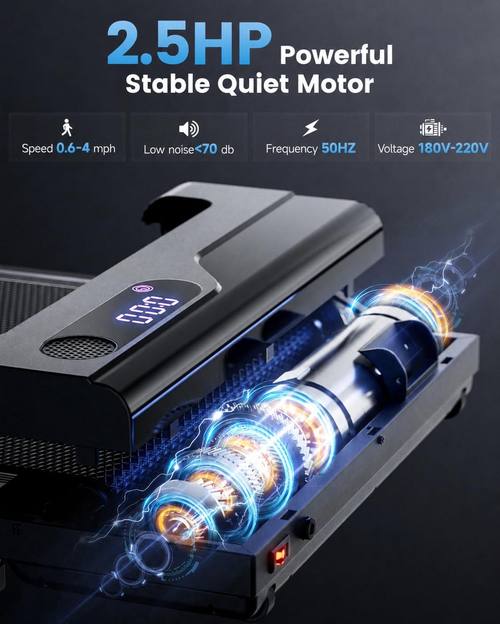
The 3.0HP figure on the handle bar model is a peak number, not a sustained one. Peak horsepower is a marketing measurement, taken for a moment under ideal conditions. What you want to know is sustained output, which almost no listing states. In practice, all four of these pads are built around the same class of motor, and the honest way to judge them is capacity and warranty rather than horsepower claims.
Capacity is the number that tells you how hard the motor will work. A 265 lb rating with a 150 lb walker is easy duty. The same rating with a 240 lb walker is a hard life. That is the single strongest argument for the 300 lb handle bar unit if you are a heavier walker, regardless of the brand name on the box.
Storage, wheels, and the eleven-use problem
I have to say this out loud, because I like walking pads and I still believe it. Most people who buy one will use it eleven times and store it under the bed. The pads that survive past week three are the ones that are easy to deploy: light enough to drag out with one hand, with wheels that roll on hard floors instead of scraping, and a profile low enough to slide under furniture without a fight.
The mini apartment pad wins this category on weight alone. The handle bar model folds, which helps, but a folded pad with a handle bar is still a bulkier object than a slim deck. If your realistic plan is ten minutes a day while coffee brews, the slim pads and the mini pad are the ones that will actually get used.
Which pad fits which desk
For a standard standing desk and a normal walking routine, the slim 4.0 mph pad is the straightforward buy. It has the shape this category is built around, the speed range that matters, and nothing extra to fight with your chair.
If you want the same class of machine and the remote matters to you as a named feature rather than an accessory, the second slim pad is the equivalent pick. These two are close enough that I would choose on availability rather than spec.
If you are in an apartment, or your only free floor space is a strip beside the couch, the mini compact pad is the one built for that constraint. Accept the narrower deck and slower comfortable pace as the price of fitting your life.
If you want to hold on, weigh more than 265 lbs, or simply want the pad that feels most like a machine rather than a moving mat, the foldable handle bar unit with the higher capacity rating is the one I would point you to. Just measure your desk height first.
Warranty is the spec that outlasts the motor
A warranty tells you what a company thinks of its own motor. One year is the category default and it means the manufacturer expects the belt or the motor to be your problem by month thirteen. Anything longer is a signal worth weighing, because these are simple machines: a motor, a belt, a control board, and a frame. When something fails on a walking pad, it is almost always the control board, and a control board replacement is the difference between a working pad and a very heavy floor mat.
Read the warranty terms before you buy, not after. Look specifically at whether the motor and the control board are both covered, and whether you pay return shipping on a warranty claim. On a budget pad, shipping can cost a meaningful fraction of the purchase.
What I'm watching next
I keep a dated list of predictions and score it every January. The one I am most confident about: the budget tier will catch up to what mid-tier pads did a few years ago, and the difference between a good cheap pad and a good expensive pad will shrink to frame stiffness and remote quality. The thing to watch first is not the motor. It is the remote, and specifically the battery, because that is where corners get cut first and where the daily experience falls apart.
I will keep walking at 2 mph, measuring at ear height, and telling you when a pad wobbles. That is the whole job.