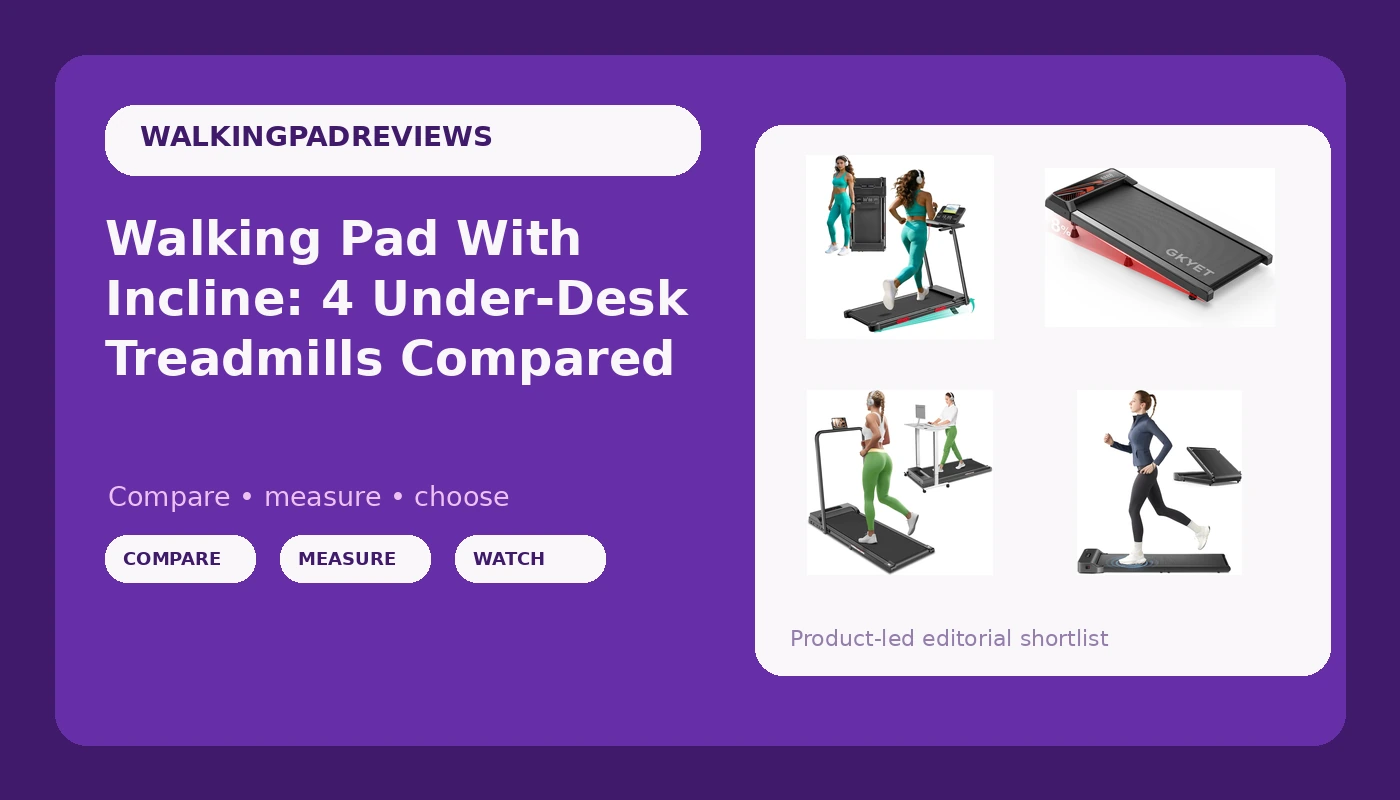
I rebuilt my home office around movement after a herniated disc at 31 taught me that sitting for ten hours a day is not a neutral choice. My physical therapist gave me a simple rule: move every hour or pay for it later. That rule is why I care about walking pads, and why I am picky about a walking pad with incline. An incline changes how much work your legs do at the same speed, which matters when you are trying to add steps without leaving your desk. It also raises the deck, shifts your cadence, and makes frame stability more important than a flashy motor number.
The four pads here are not the same machine with different stickers. One is built for the space under a standing desk. One is a handlebar model for actual walking workouts. One is a budget foldable with handles. One is a premium compact pad from WalkingPad. I compared them on the things that survive the honeymoon phase: incline, deck height, belt width, handle design, motor honesty, remote quality, and warranty.
The best walking pad with incline for most home offices is the Walking Pad Treadmill with the 8% incline, because it is designed around the desk first. It keeps the deck low, skips the handlebar clutter, and adds incline without turning your office into a gym corner. If you want handles, a wider speed range, and a higher weight capacity, the Treadmills with Handle Bar is the better buy.
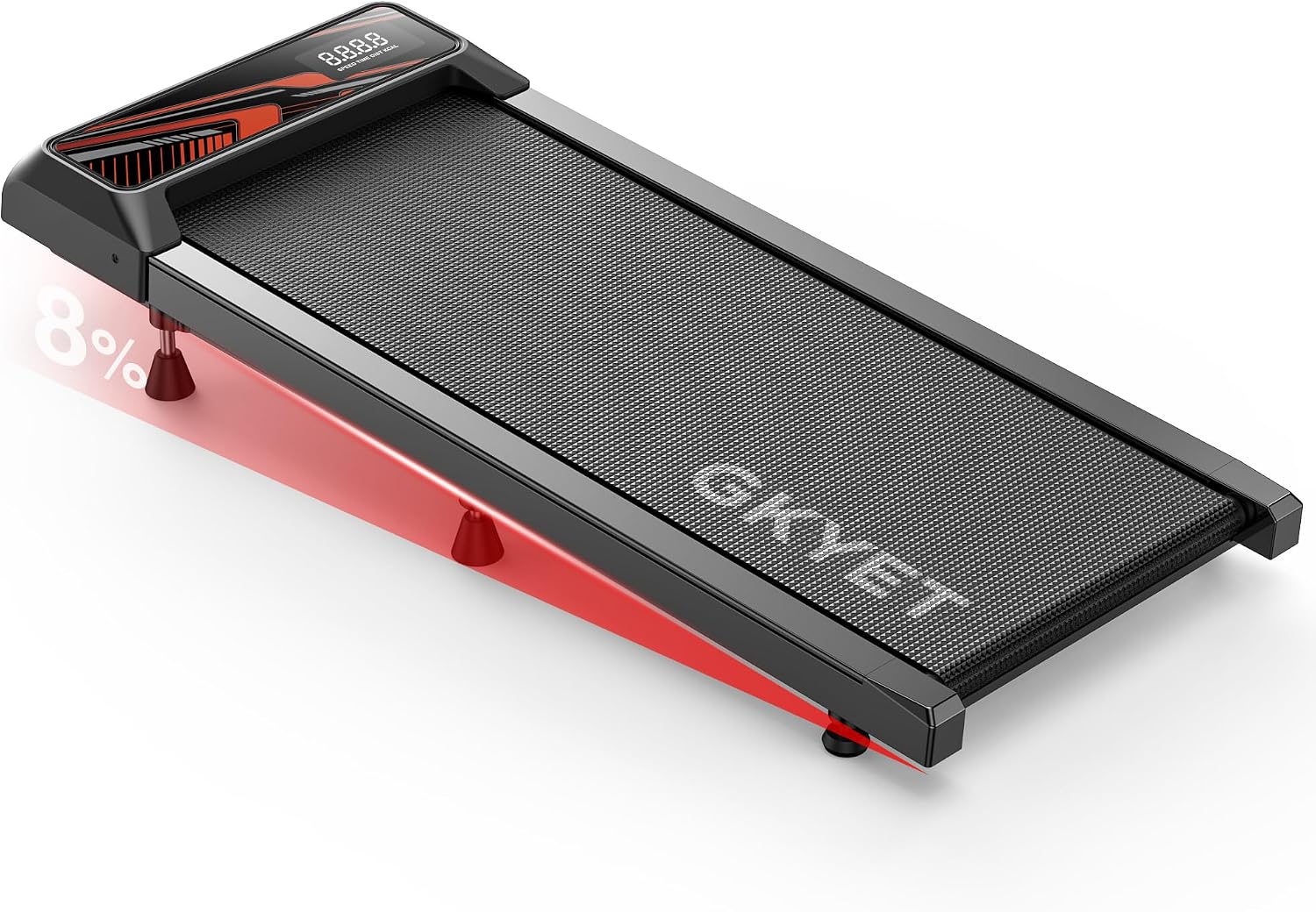
Walking Pad Treadmill, 8% Incline Under Desk Treadmill for Home Office
8% incline in a true under-desk shape, with no handlebar to block a chair or a desk
No published motor or weight capacity, and no handles for balance at faster walking speeds
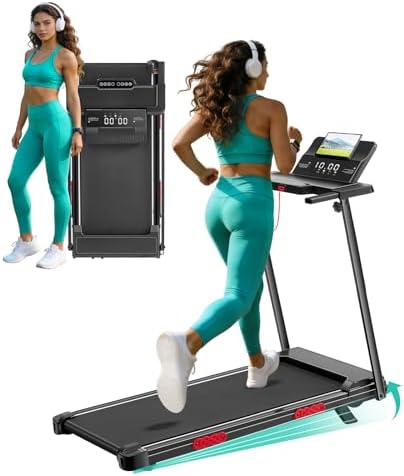
Treadmills with Handle Bar, Walking Pad with Incline for Home Small, Portable Treadmills for Home Exercising, Electric Mini Walking Pad Treadmills with Handles, 3.5HP, 0.6-10MPH, 400LBS
3.5HP motor, 0.6 to 10 MPH range, 400 lb capacity, incline, and handles for stability
The handlebar makes it bulky under a standing desk, and a 10 MPH ceiling invites running this category should not do
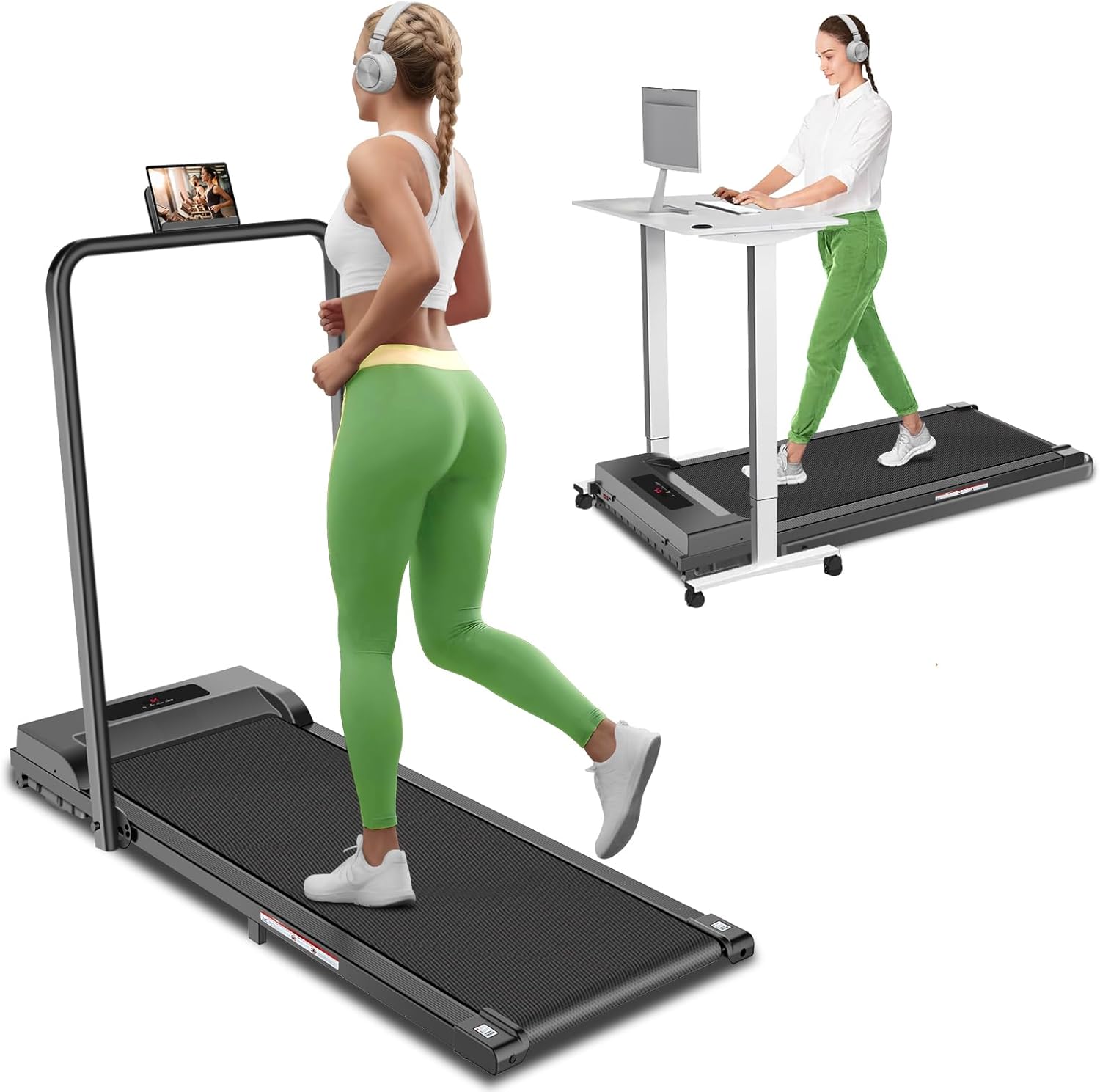
Aiteid Treadmill with Handles, Small Treadmills for Home, Portable Electric Treadmills for Home 300 lbs Capacity, Walking Pad Treadmill, Lightweight Foldable Walking Pad (Black Red)
Handles, a 300 lb capacity, a lightweight foldable frame, and a simple design
No stated incline, lower capacity than the handlebar option, and fewer published specs to compare
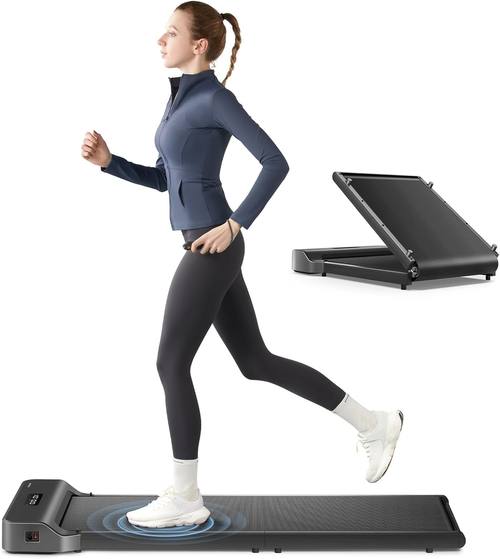
WalkingPad Z1 Foldable Walking Pad Treadmill, Under Desk Compact Design
WalkingPad brand recognition, a foldable frame, and a compact under-desk footprint
No stated incline or handles, a premium tier position, and fewer specs to compare against the field
Prices and availability were captured from Amazon Creators API and may change.
How I compare walking pads
The first thing I check is not the motor. It is the remote. I use mine dozens of times a day, and a remote that needs line of sight, or an app account just to change speed, is a daily annoyance that no spec sheet mentions. A good remote works from a seated position, through a desk, without a ritual.
Then I check belt width and deck height. Belt width decides whether you can walk with a natural stride or spend the whole session correcting your foot placement. Deck height decides whether the pad slides under your desk and whether your knees clear the underside when you sit down. A pad that is too tall turns a standing desk into a compromise.
Manufacturers quote decibel ratings at idle. I care about noise at walking speed, at ear height, because that is what a Zoom call hears. Treat any idle dB number as marketing until you find reviews that mention noise while walking. A pad that is quiet at idle can still hum at 2 mph.
Finally, I check the warranty. A company that trusts its motor backs it for years, not months. That single line on a product page tells you more about build quality than a peak horsepower claim.
Incline: the feature that changes the math
Incline is the reason this comparison exists. At the same speed, an incline makes your legs work harder, which is useful when you are capped at a desk-friendly pace. It also changes your foot strike and your cadence, and it raises the deck, which is the trade-off nobody mentions.
The Walking Pad Treadmill with 8% incline is the clearest example of incline done for a desk. Eight percent is enough to feel like a hill without forcing you into a grip on the rails. It is not a substitute for a gym treadmill, and you should not run on it. It is a way to make a 30 minute walking block count for more.
The Treadmills with Handle Bar also lists incline, and it pairs that with handles. That combination makes sense for walking workouts where you want something to hold at the steepest setting. For pure under-desk use, the incline plus the handlebar is a lot of machine in a small footprint.
Handles: when they help and when they hurt
Handles are a category splitter. If you want to walk while you work, handles are usually in the way. They block the chair, they limit how close you can sit to the desk, and they add height that can collide with the underside of a standing desk.
If you want a walking workout, handles are a safety feature. They give you something to steady yourself when you change speed or incline, and they make a faster walk feel less precarious. The Aiteid Treadmill with Handles and the Treadmills with Handle Bar both sit on this side of the line. The WalkingPad Z1 and the Walking Pad Treadmill with 8% incline sit on the desk side.
My rule is simple: buy handles if the pad is for exercise, skip handles if the pad is for work. Buying handles and then trying to use the pad under a desk is how people end up storing a machine under the bed.
The desk-first pick: Walking Pad Treadmill, 8% Incline
This is the one I would start with for a home office. The 8% incline is the headline, but the shape is what matters. It is an under-desk treadmill first, which means the deck is meant to live under a standing desk and the controls are meant to be reached from a chair.
What it does well: it adds incline without a handlebar, so your desk setup stays a desk setup. The walking surface is the point, not the console. It fits the use case that most buyers actually have, which is slow walking during calls, email, and reading.
What to watch: the listing does not publish a motor rating or a weight capacity, so if you are near the top of the usual weight range for this category, ask the seller before you buy. There are no handles, so if you like to hold on at faster speeds, this is not the pad for you. And as with any incline pad, check the deck height against your desk before you commit.
The exercise-forward pick: Treadmills with Handle Bar
This is the most fully specified pad in the group. The listing names a 3.5HP motor, a 0.6 to 10 MPH range, a 400 lb capacity, incline, and handles. That is a mini treadmill with a walking pad footprint, and it is aimed at people who want to walk for exercise, not just accumulate steps during the workday.
The 400 lb capacity is the standout number here. If you have been frustrated by pads with vague or low weight limits, this one puts a real figure on the page. The 0.6 MPH starting speed is also desk-friendly, which matters because many pads start too fast for focused work.
The trade-off is the handlebar. It makes the machine taller and bulkier, and it changes how you position your desk. The 10 MPH ceiling also suggests a running capability that I would not use on a walking pad. This is a walking machine with a high top speed, not a running treadmill.
The budget handle pick: Aiteid Treadmill with Handles
The Aiteid is the simplest machine here. It has handles, a 300 lb capacity, a lightweight foldable frame, and a black and red finish. It does not list an incline, so if incline is your priority, this is not the one.
Where it fits: someone who wants a foldable walking pad with handles for balance, does not need incline, and wants a straightforward machine. The lightweight frame is a real advantage if you need to move the pad between rooms or store it upright.
Where it falls short: the published specs are thinner than the Treadmills with Handle Bar. No incline, a lower capacity, and no motor figure in the name. That does not make it a bad pad, but it makes it a harder comparison. If you are choosing between the two handle models, the one with the 400 lb capacity and the published motor is the safer bet for heavier use.
The compact premium pick: WalkingPad Z1
WalkingPad is the brand that made this category legible to normal people, and the Z1 is its compact foldable entry. The design goal is clear: a walking pad that folds, stores small, and fits under a desk without dominating the room.
What you get: brand recognition, a foldable frame, and a compact under-desk design. What you do not get from the listing: a stated incline, handles, or a published motor and capacity. That is the premium tax in this category. You are paying for the engineering and the name, and the spec sheet is quieter than the price tier suggests.
If your priority is the smallest possible folded footprint and you trust the brand, the Z1 is the pick. If your priority is incline, the Walking Pad Treadmill with 8% incline is the better fit. If your priority is a published weight capacity, the Treadmills with Handle Bar wins.
Motor specs: peak versus sustained HP
A 3.5HP claim on a walking pad is almost always a peak number. Peak horsepower describes what the motor can do for a moment, not what it can do for an hour. Sustained horsepower is the number that matters for a pad you walk on for 45 minutes at a time.
Ask the seller for the continuous duty rating if the listing only gives a peak figure. If the answer is vague, treat the motor claim as marketing. The same logic applies to speed ranges. A 0.6 to 10 MPH range tells you the controller can drive the belt to 10 MPH, not that the deck is stable or safe at 10 MPH. For desk walking, the bottom of the range matters more than the top.
Noise, Zoom calls, and realistic expectations
I keep a decibel meter on my desk, and the pattern is always the same: idle noise and walking noise are different animals. A pad that whispers at idle can develop a rhythmic hum once the belt is moving and your weight is on the deck. That hum is what your microphone picks up.
Before you buy, look for reviews that mention noise while walking, not while standing. Check the return policy. If you take calls all day, test the pad on a call during the return window. And remember that belt tension, deck material, and motor mounting all change the sound, so two pads with the same motor can sound completely different.
Belt width, deck height, and cadence
Belt width is the spec that decides whether you can walk naturally. A narrow belt forces a shortened stride, and a shortened stride at 2 mph feels like marching in place. If you have wide feet or a long stride, measure your shoe and compare it to the belt before you buy.
Deck height decides whether the pad works under your desk. Measure from the floor to the underside of your desk, then compare that to the pad height plus your shoe. Leave room for the incline, because an incline raises the front of the deck. Cadence is the last piece. Most people walk at a faster cadence than they expect, and a pad that feels stable at 1.5 MPH can feel twitchy at 2.5 MPH.
Who should not buy a walking pad
If you want to run, buy a treadmill. Walking pads are not built for running, and the safety profile is different. If you are rehabbing an injury, talk to your physical therapist before you buy any pad, and follow their guidance rather than a product listing. I am not going to make medical claims about curing back pain, because a walking pad does not do that.
If you know you will use the pad eleven times and then store it under the bed, be honest with yourself. The best pad for you might be a pair of shoes and a timer that tells you to stand up every hour. A walking pad is a tool for adding movement to a desk-bound day, not a personality change.
Final verdict
For most home offices, the Walking Pad Treadmill with 8% incline is the best walking pad with incline here because it keeps the desk use case first. It adds incline, skips the handlebar clutter, and stays out of the way when you sit down.
If you want handles, a published 3.5HP motor, a 400 lb capacity, and a wide speed range, choose the Treadmills with Handle Bar. If you want a foldable pad with handles and do not need incline, the Aiteid is the simple option. If you want the smallest folded footprint from the best-known brand in the category, the WalkingPad Z1 is the premium compact pick.
Whichever you choose, buy from a seller with a return window, test it on a real workday, and measure your desk before it arrives. A pad that fits your space and your remote habits will get used. A pad that fights your desk will become an expensive footrest.