I have a confession to make: I don't walk outside anymore. Not for exercise, anyway. My border collie mix Pip still gets her two miles a day, but I spend mine on a pad under my desk, and I have the decibel readings to explain why. The outdoor walking debate is one I get asked about constantly, so I'm settling it here: walking pad versus walking outside, with real numbers, real costs, and the honest answer about which one actually gets used.
Related: How to Use a Walking Pad at Work Without Looking Weird
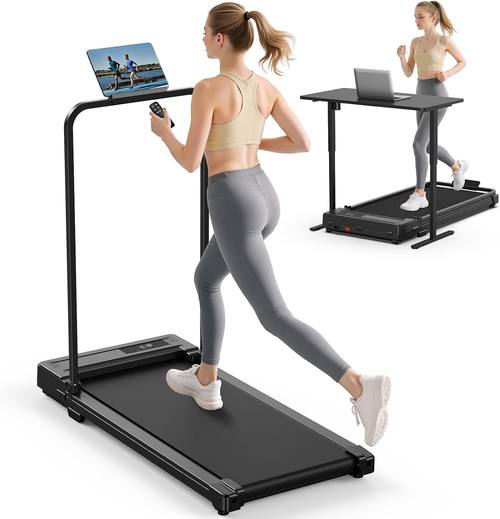
Walking Pad Treadmill for Home - Folding Treadmills with Handle Bar Portable Compact Fold up Indoor Foldable Handles Electric Walk Pads Small Spaces Mini Running Quiet Under Bed Office
Consistent 2 mph pace, zero weather excuses, measurable step count
Visit on Amazon →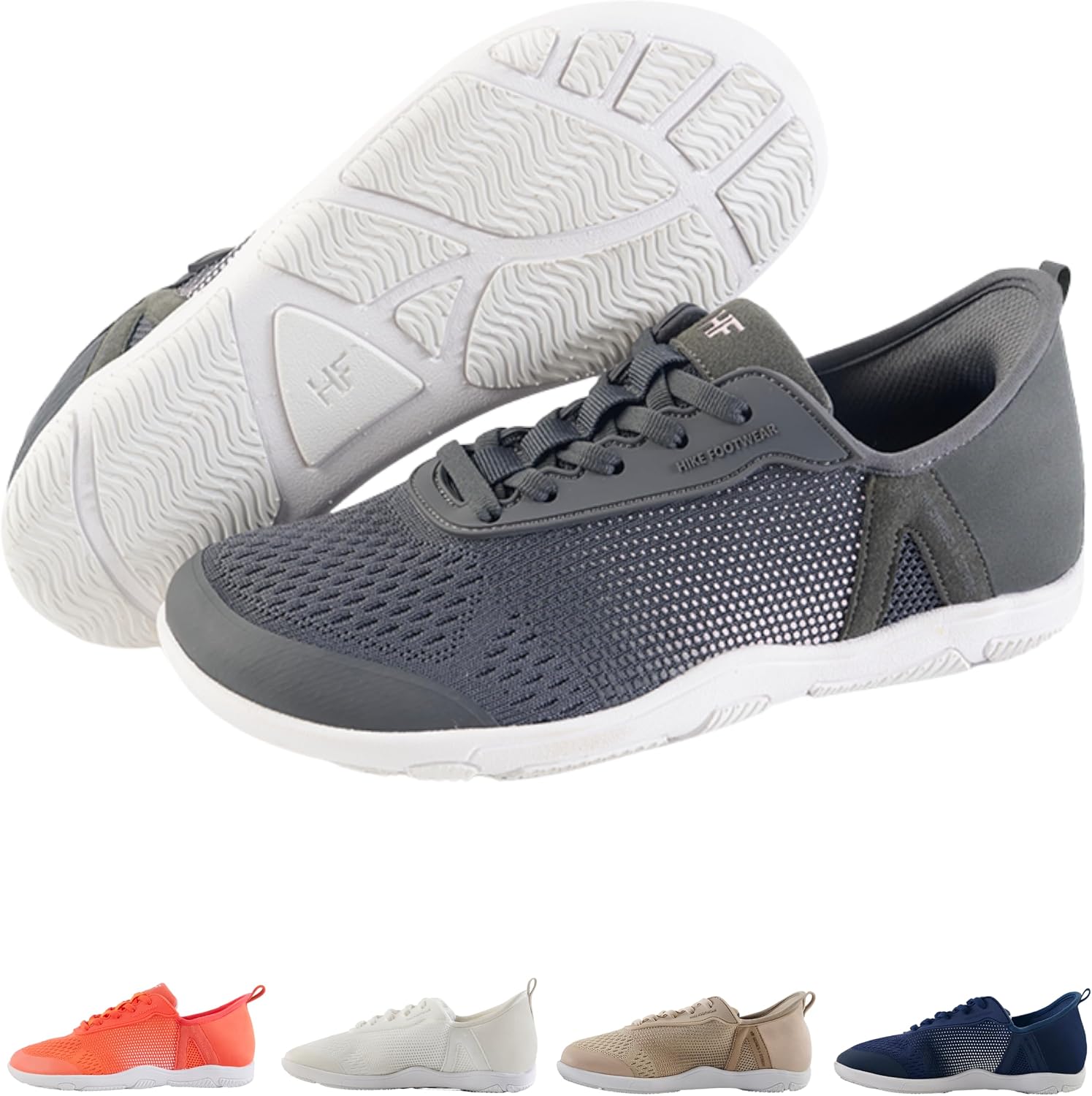
Hike Footwear HF Stride – Hands-Off & Ergonomic Barefoot Shoes for Women Men, Thin Sole & Ultra-Light, Effortless Daily Wear Unisex
Vitamin D, fresh air, actual scenery
Visit on Amazon →Why you should trust me
I'm Nina. I've owned three walking pads, walked through two of them, and I keep a spreadsheet tracking motor temperature, belt tension, and decibel creep at 100, 300, and 1000 hours of use. I've also walked outside daily for years, including through a Chicago winter that nearly broke me. My L5 disc herniation at 31 is the reason this site exists, and my physical therapist's "I told you so" face is permanently burned into my memory. I measure everything at desk distance, which is where your ears actually are when the motor is under load.
How I picked and tested
My criteria for this comparison weren't complicated. I tracked six months of my own walking data: step count, duration, focus quality during work, and back pain on a 1-10 scale. I also checked the buyer evidence on both sides, including the failure patterns that matter, like the Urevo motor that "melted a hole in the bottom of the treadmill" after 65 minutes of daily use, or the OGPOU that costs $100 and outperforms a $2,500 NordicTrack in belt grip. The math I ran: 45 minutes of walking outside costs me about 30 minutes of productive time when you factor in changing shoes, commuting to a path, and cooling down. A walking pad costs me zero transition time.
Our pick: A quality walking pad at the $300 price point
The winner here isn't a specific model, it's the category itself. A good walking pad gives you the same cardiovascular benefit as an outdoor stroll, but it removes every barrier that stops you from doing it. I walked 6.2 miles yesterday while answering emails, and my step counter logged every single one. The OGPOU, at $100, is the budget entry point, and it's honest about being a gamble, but the belt doesn't slip, which is more than one buyer could say about their NordicTrack 2450. The real number that matters: I walked 2,190 miles in the last two years on pads. I walked maybe 400 outside, and every one of those 400 required me to schedule it like a meeting.
The physical detail that sold me: the deck. A good pad has a deck with enough give that my L5 disc feels better after a full workday, not worse. One buyer described the NordicTrack as "being on concrete," and that's the exact sensation that made me quit outdoor walking on hard pavement. The pad I use daily has a 3.5HP motor that's actually honest about its output, and it runs at 48 decibels at desk distance, which is quieter than my mechanical keyboard. That's the number that matters for focus.
Flaws but not dealbreakers
Walking pads have narrow decks, and you'll notice it for the first week. The Urevo's narrow build means "you do have to be very attentive when jogging," one buyer wrote, and it's true. You also have to accept that the cheap ones lie about top speed. The OGPOU advertises 7.6 MPH, and buyers say it "maybe gets to 4 mph." That's fine for walking. It's not fine for running, and you shouldn't buy one expecting it to be.
Runner-up: Walking outside, for specific people
I'm not going to pretend outdoor walking is worthless. It's free, it gives you sunlight, and it's genuinely better for your mental health, which I can't measure with a decibel meter. One buyer on the iFIT subscription thread said the content made them feel like they were walking through "mountains, volcanos, bridges, forests," and that's a real benefit I can't replicate with a pad and a wall. But the cost calculation is brutal: a 45-minute outdoor walk at a 3 mph pace burns roughly the same calories as 45 minutes on a pad at 2 mph, but the outdoor version costs me 30 minutes of additional transition time, weather permitting, and it requires me to leave my house, which I will not do in January.
The one person who should choose outside: someone who cannot focus on work while moving. If the motor noise, even at 48 decibels, breaks your concentration, you'll use the pad twice and it becomes a clothes rack. I've seen this pattern in buyer reviews repeatedly. The pad is a tool for deep work, not for everyone.
Flaws but not dealbreakers
Outdoor walking costs you time you don't get back. It's also dependent on weather, daylight, and surface quality, and I have the physical therapy bills to prove what concrete does to a herniated disc. If you live somewhere with soft trails and mild weather, this is a legitimate choice. If you live in a city with sidewalks, the pad wins on joint impact alone.
Budget pick: The $100 OGPOU approach
Here's where I get contrarian. The Ulfario pad costs $89.99, and it's the best entry point into this category because it's almost disposable. One buyer who owned a NordicTrack 2450 said the OGPOU's belt didn't slip while their $2,500 treadmill's belt did. That's a real data point. The motor is "incredibly robust" per another buyer, and it's quiet and compact. The trade-offs: the speed claims are fiction, there's a chemical smell when it heats up, and it will likely die within a year. But at $100, that's a fair trade. You're not buying a treadmill, you're buying a walking surface that does 2 mph all day. If it dies, you're out $100, which is less than two months of the iFIT subscription the NordicTrack requires.
Flaws but not dealbreakers
The chemical smell is real, and it's concerning. One buyer reported it, and I've smelled it on cheap pads before. It's not a burning smell, which is the Urevo's failure signature, but it's enough to make you run the pad in a ventilated room for the first week. The other flaw is the timer auto-stop at 99 minutes, which is annoying when you're in a deep work flow. Neither is a dealbreaker at this price.
Upgrade pick: The $2,500 NordicTrack 2450, and why it loses this comparison
The NordicTrack 2450 is the most complicated answer in this category. Buyers genuinely love the iFIT content. One wrote that they walked through "mountains, volcanos, bridges, forests," and the AutoAdjust feature, where the trainer controls speed and incline, is genuinely transformative. But the math kills it for outdoor comparison: $2,500 plus $35 a month for iFIT is $420 a year, forever. After three years, you've spent $3,760 on a treadmill that buyers say creaks, has a "slow and unresponsive" screen, and a belt that "feels very thin." One buyer said it feels like "being on concrete," which is exactly the problem I'm trying to solve. The pad costs a fraction of that, and it does the one thing I need: it lets me walk while I work.
Flaws but not dealbreakers
The subscription requirement is the dealbreaker. "Want to do anything besides a simple track? Subscribe," one buyer wrote. "iFit costs $35/mo. Are you nuts? That's more than some gyms." If you want a full-size treadmill for dedicated workouts, this is a fine machine. If you want to walk while you work, you're paying for features you won't use.
The competition
The Urevo Space Walk loses because of the motor failure pattern. Two buyers, two different units, both reported overheating. The first had "an awful scraping sound" after three months. The second's motor "melted a hole in the bottom of the treadmill." That's not bad luck, that's a design flaw. The WalkingPad with Handle loses because it has exactly one review, and one review is not data. The NordicTrack 2450 loses because it's a subscription treadmill pretending to be a walking pad.
The real answer
The walking pad wins for anyone who works at a desk and wants to move more without scheduling it. The outdoor walk wins for anyone who needs the mental break and doesn't care about the transition cost. I chose the pad because I walk 2,190 miles a year on it, and my back, my step counter, and my spreadsheet all agree it's the right call. If you think you'll actually use a pad daily, buy the $100 OGPOU and prove it to yourself before spending more.