I spent nine years as a backend engineer sitting for ten hours a day, and my L5 disc eventually filed a formal complaint. My physical therapist gave me one instruction that actually mattered: get up every hour, or pay for it later. That is the whole reason this site exists, and it is the lens I put on every product that lands in my office. So when I lined up an under desk walking pad against a folding treadmill and two yoga mats, I was not asking which one is "best." I was asking which one keeps a body moving at 3 p.m. on a Tuesday, when the work is boring and the chair is three feet away.
Related: Under Desk Walking Pad Noise: What 55 dB Actually Means
The best pick for most desk workers here is the walking pad with a handle bar, because a handle bar is the difference between a 20 minute experiment and a two hour work session. The folding 2 in 1 is the better pick if you also want a light treadmill for non-desk use. The two mats are not walking surfaces at all, and buying one thinking it will replace a pad is the most expensive mistake in this category.
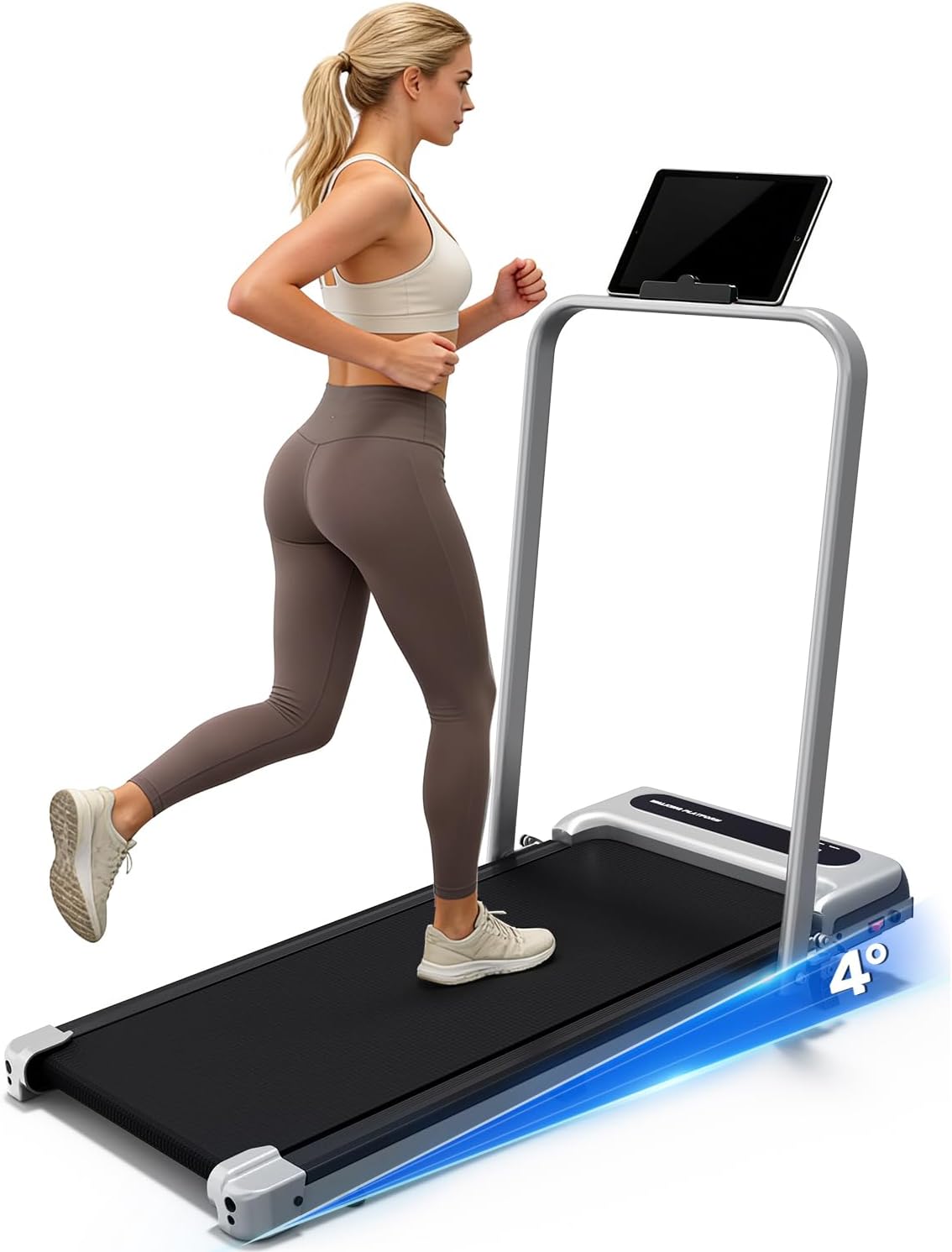
Walking Pad Treadmill for Home, Incline Walking Pad with Handle Bar
The only option in this group with a handle bar, and the only one with incline. Both change how long you can realistically stay on it.
The handle bar eats floor space and makes it harder to shove under a couch than a flat folding unit.

Goplus 2 in 1 Folding Treadmill, 2.25HP Under Desk Electric Superfit Treadmill, Installation-Free with APP Control, Remote Control, Bluetooth Speaker, LED Display, Walking for Home
Folds flat, ships assembled, and the 2 in 1 design gives you a raised console position for standing workouts.
A 2 in 1 carries hardware you do not need for desk walking, and that hardware adds weight you will feel every time you move it.
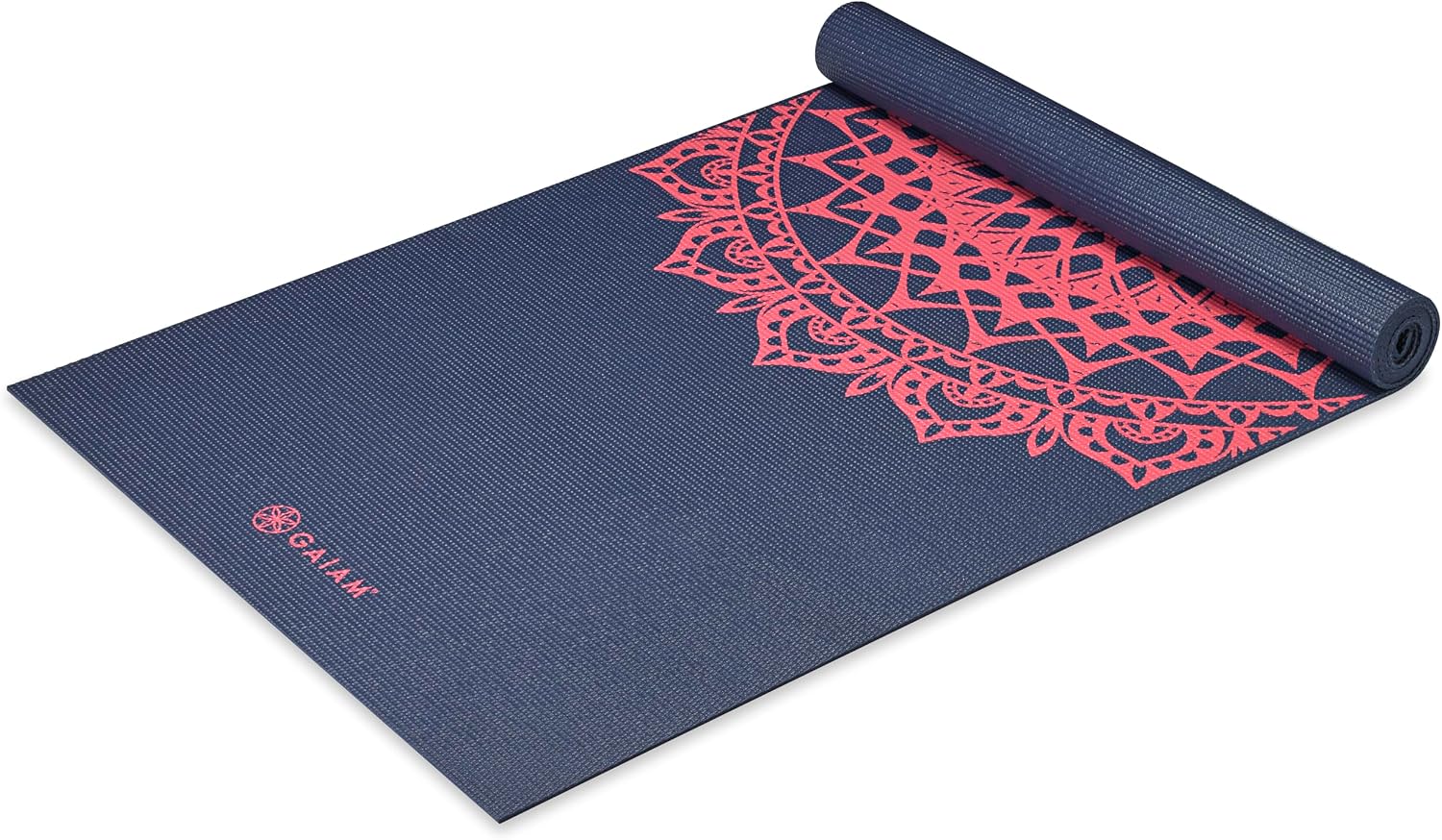
Gaiam Yoga Mat Classic Print, 4mm Non-Slip Mat
Real 4mm of cushion for stretch breaks and floor work, with a non-slip surface and prints that do not scream gym.
It is roughly two feet wide. It is a mat, not a walking surface, and treating it as one is how ankles get rolled.
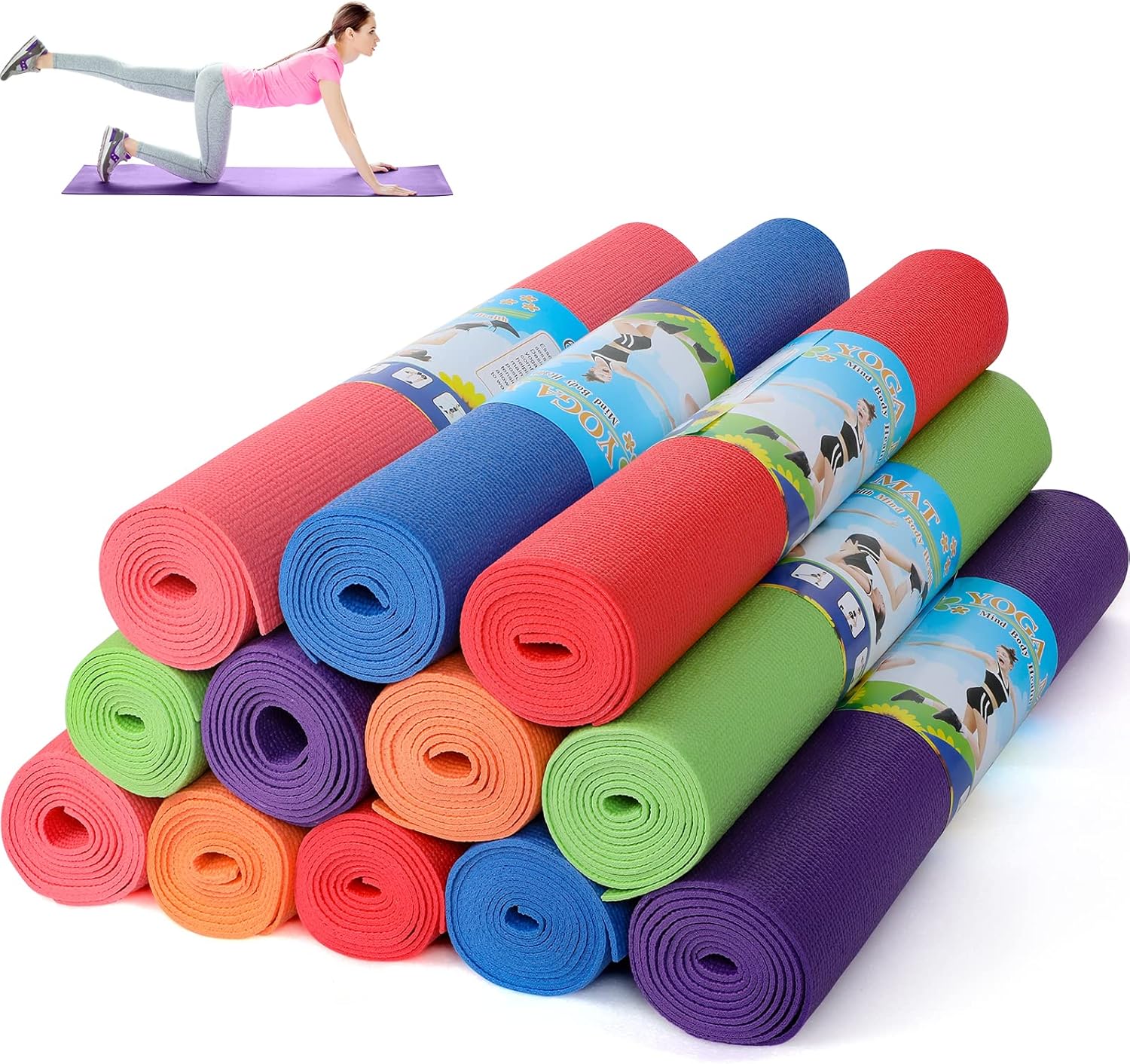
Amylove 12 Pieces Yoga Mats Bulk 68x24x0.12 Inch Exercise Non Slip Fitness Workout Mats for Women Men Home Workout Gym Yoga
Twelve mats in one order, which is the cheapest way to cover a floor or outfit a group session.
At 0.12 inch thick these are surface layers, not cushioning. They will not protect knees or elbows the way a 4mm mat does.
Prices and availability were captured from Amazon Creators API and may change.
How I judge anything that goes under a desk
A walking pad is a medical device with a marketing problem, so I review it like one. Four things decide whether a pad survives past week two in my office.
The first is noise at walking speed. Manufacturers quote decibels at idle, and idle is not a real condition. A pad that reads 55 dB sitting still is not a 55 dB pad at 3 mph, and if you take calls all day that difference is the whole product. The second is the remote. It is the most important feature nobody tests, and I press mine forty times a day. A remote that needs line of sight to the deck, or an app that wants an account before it will change your speed, is a design failure, not a quirk.
The third is deck height and belt width. A tall deck means a bigger step up every time you get on, which matters more than it sounds when you are getting on and off hourly. A narrow belt punishes you for drifting, and drift is what happens when you are reading a pull request instead of watching your feet.
The fourth is warranty. A company that trusts its motor backs it for three years. A one year warranty on a motor that runs four hours a day tells you what the manufacturer expects.
The handle bar pad: the one I would buy first
The Walking Pad Treadmill for Home with an incline and a handle bar is the only unit in this comparison that assumes you might stay on it for a while. A handle bar does two jobs. It gives you something to grab when you look away from your feet, and it makes incline walking realistic, because incline without support turns into a balance exercise you did not sign up for.
Incline is the underrated spec here. Walking pads are speed-limited by design, and that is correct, because these are not treadmills and running on one is a different safety profile entirely. If you cannot add speed, adding grade is how you add load. A modest incline at 2 mph will raise your heart rate more than a flat belt at 3 mph, and it does it without asking your knees for anything extra.
The cost is footprint. Handle bars do not fold into a coffee table shape, and if your home office is a corner of a living room, that matters. There is also a real risk of buying more machine than you need. If your plan is 40 minutes of slow walking while you answer email, a handle bar is comfort, not necessity. If your plan is two hours, buy the handle bar.
The folding 2 in 1: better for two jobs, worse for one
The Goplus 2 in 1 Folding Treadmill is aimed at people who want one machine instead of two. It folds, it arrives assembled, and the 2 in 1 label means the console can be raised so the same belt serves as a light treadmill rather than only a walking pad. The 2.25HP motor, the app control, the remote, and the Bluetooth speaker are all listed features, and for a household that wants to walk during the workday and jog a little on weekends, that flexibility is the point.
My objection is the same one I have with every 2 in 1. The extra hardware costs weight, and weight is the enemy of a device you are supposed to move out of the way daily. Folding mechanisms are also another set of joints that can loosen. None of that makes it a bad machine. It makes it a compromise machine, and compromises are fine as long as you know you bought one.
If your only goal is hourly walking at a desk, the folding design is paying for a feature you will not use. If your goal is "one belt for the whole house," this is the more sensible of the two motorized options.
The two mats: floor work, not walking
Here is where I need to be blunt, because this is where people waste money.
The Gaiam Yoga Mat Classic Print is a 4mm non-slip mat, and 4mm is a real number. It is thick enough for floor work, stretching, and the ten minutes of hip and hamstring work that makes sitting all day survivable. It is roughly two feet wide and it is designed to be stood on barefoot, not walked on at speed. Nobody should buy this expecting it to be a walking surface, and nobody should buy a walking pad expecting it to be comfortable for floor work. They are not substitutes. They are two halves of the same desk-worker routine: walk for the hour, then get on the floor for five minutes so the walking does not tighten everything up.
The Amylove bulk set is a different product for a different buyer. Twelve mats at 68 by 24 by 0.12 inches means you are buying coverage and count, not cushion. At 0.12 inch these are thin surface layers. That is genuinely useful if you run a class, outfit a small studio, or want to lay down a clean, non-slip layer over a hard floor in a shared space. It is not useful if you want a mat to lie on for twenty minutes, because your knees will find the floor through it.
The honest read: if you are one person in a home office, buy one 4mm mat. If you need twelve mats, you already know why, and this is a straightforward way to get them.
The trade-offs nobody puts in the bullet points
Cheap pads share a lot of parts. Most units under $300 use the same class of motor and differ mostly in sticker and frame. That is not automatically bad. It means the places quality actually shows are the frame stiffness, the belt width, and the remote.
The two failure modes I see most in budget pads are wobble and wheels. A pad that is stable at 1.5 mph can start to shimmy at 2.5 mph, and once you feel that, you stop trusting the machine and you stop using it. Wheels that scrape the floor are the other one. Both are the kind of thing that shows up in the first week, which is why I care about return windows more than I care about peak horsepower claims.
On the mat side, the trade-off is thickness against stability. A thicker mat is kinder to your knees and worse for balance poses. A 0.12 inch mat is stable and unforgiving. Neither is wrong. They answer different questions.
What the specs actually predict
Peak horsepower is a marketing number. Sustained horsepower is the number that matters, and most listings do not give it to you. If a listing leads with peak, assume the sustained figure is lower and plan accordingly.
Warranty length is a better predictor of quality than any motor spec. Noise ratings measured at idle are close to useless. Belt width is the spec people ignore and then complain about. And on the mat side, thickness in millimeters or inches is the only number that tells you what the mat will feel like under a knee.
Notice what is missing from all four listings: a number for how loud the machine is while a human being walks on it at 2 mph. That number is the one I actually want, and it is the one nobody publishes.
Who should buy what
If you work at a desk eight hours a day and your back has already sent you a warning, buy the walking pad with the handle bar. Add the 4mm mat for floor work and you have a complete setup for a normal home office budget.
If you want one machine that walks during the week and handles a light jog on the weekend, buy the folding 2 in 1 and accept the weight.
If you run a studio, a class, or a shared workspace, buy the bulk mat set and stop worrying about per-mat cost.
If you are buying a mat to walk on, buy a walking pad instead. That is the whole mistake this comparison exists to prevent.
What I am testing next
I want a pad that publishes a sustained noise figure at walking speed, and I have not found one yet. I am also watching remote battery life, because in my experience that is the first thing to fail and the last thing anyone reviews. And I keep waiting for the cheap end of this category to consolidate around two or three real factories, which is when the sub-$300 pad stops being a lottery and starts being a recommendation. When that happens, this table gets rewritten.