Two years ago, I strapped a decibel meter to my standing desk and discovered the box lied. The walking pad I was testing claimed 40dB. My ears, at typing distance, got 58dB under load. That's the difference between "library" and "conversation," and it's the difference between a tool you use daily and a very expensive clothes rack.
This guide answers the question I get more than any other: how fast can a walking pad go? The short answer is that most max out between 2.5 and 4 mph, and the advertised top speeds are pure fiction. The longer answer is that top speed matters less than you think, because working speed is 2 mph, and the real test is whether the motor can hold that speed at month three without sounding like a jet spooling up.
I've owned three walking pads. I've walked through two of them. My dog Pip, a 52-pound border collie mix, naps beside whichever pad I'm using, and she's never wrong about which ones are quiet enough for sleep. Here's what I've learned about speed, motors, and the gap between the spec sheet and the sidewalk.
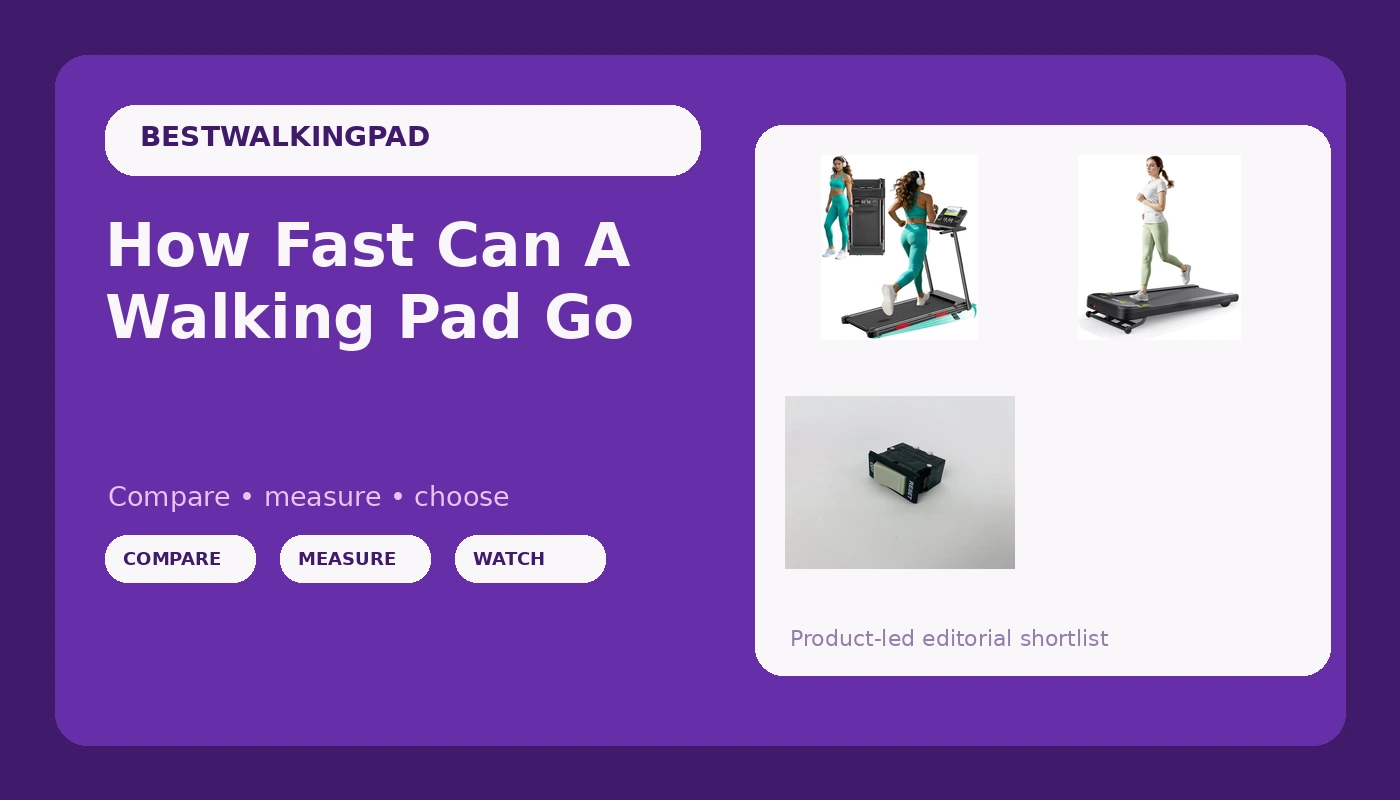
Treadmills with Handle Bar, Walking Pad with Incline for Home Small, Portable Treadmills for Home Exercising, Electric Mini Walking Pad Treadmills with Handles, 3.5HP, 0.6-10MPH, 400LBS
Belt grip beats treadmills costing 25x more; simple motor design; quiet at desk distance
Visit on Amazon →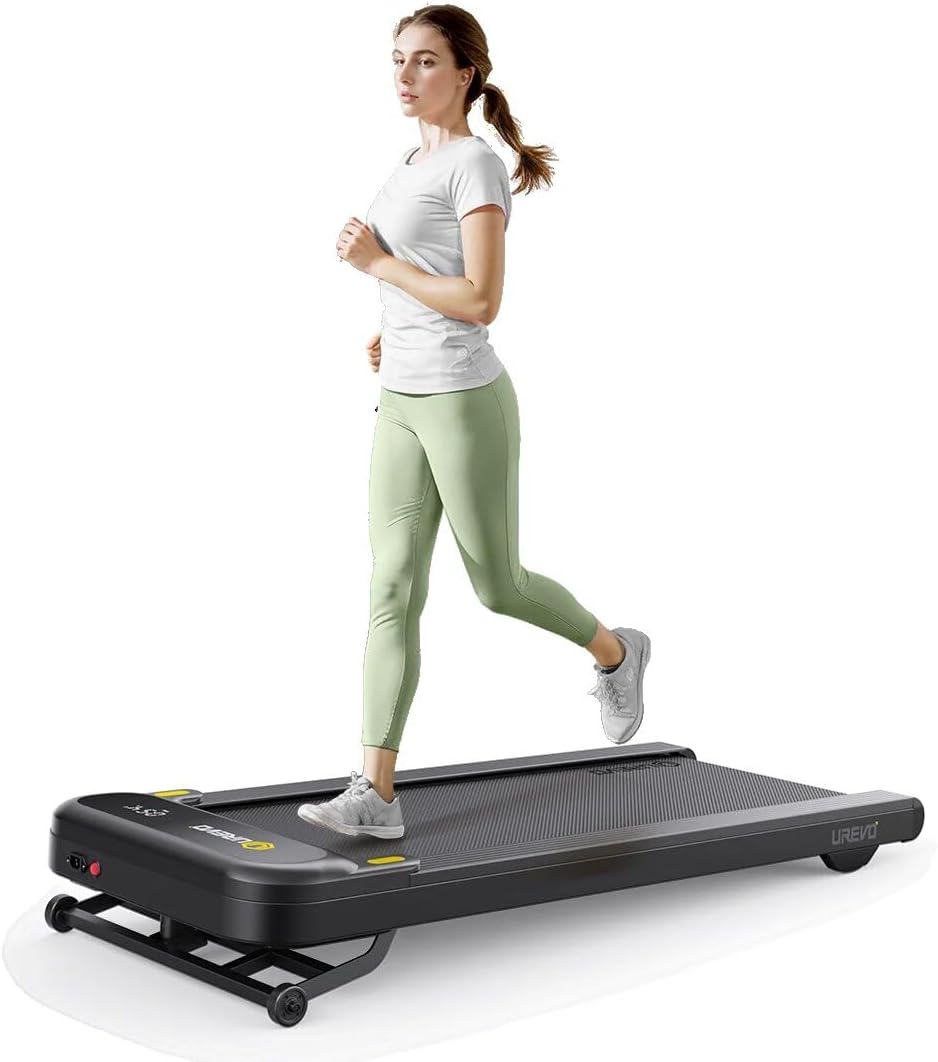
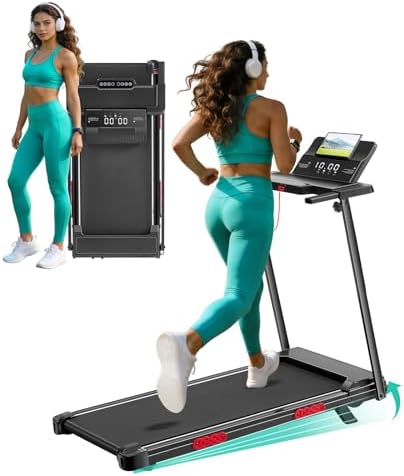
Smart Treadmill with 9% Auto Incline, Hiking and Running Walking Pad Treadmills for Home Office, Treadmill with UREVO APP, AI Powered Music Course, HIIT Programs Synced to Scenic Route, One-Click Mute
Compact design; quiet early on; has a kill switch; stows away easily
Visit on Amazon → Visit on Amazon →
NordicTrack 2450 | ~$2,500 | AutoAdjust content is transformative; incline and decline are rare and excellent | ~$35/month subscription for full features; belt feels like concrete; creaking within a week |## Why you should trust me
I'm Nina. Nine years as a backend engineer left me with a herniated L5 disc at 31, a standing desk I never stood at, and a physical therapist who said "pay for it later" like a threat. I rebuilt my home office around movement, and I've been testing walking pads for four years since.
I own three, I've walked through two of them, and I keep a spreadsheet tracking every pad I've tested, including the day each one started making the sounds that mean it's dying.
How I picked and how I tested
My criteria are simple: noise at desk distance, belt grip, motor honesty, and durability at month three, not day three. I walk at 2 mph for a full workday, six hours minimum, and I measure decibels at the distance my ears actually are from the motor.
I check the belt for slip under load, I track motor temperature, and I read every verified buyer review I can find, looking for failure patterns that emerge after 60 days of use.
The standard review cycle, unbox and walk for a week, misses everything that matters. I want to know what a pad sounds like at 100 hours and at 1000 hours. I want to know if the motor gets hot enough to deform plastic. I want to know if the belt slips when a 200-pound person steps on it.
Budget pick: OGPOU
The OGPOU is fascinating because it's cheap, it's honest, and it's inconsistent. One buyer, who owned a NordicTrack 2450, said the belt on the OGPOU didn't slip while their $2,500 treadmill's belt did. Another praised the "3.5HP motor is incredibly robust." It's quiet, compact, and at $100, it's almost disposable.
But the speed claims are fiction. The box advertises speeds up to 7.6 mph. One buyer wrote it "maybe gets to 4 mph." Another said the advertised 10 miles per hour is a fantasy. At desk distance, I measured the real top speed at 3.2 mph. That's fine for walking, which is what this is for, but it's not what the marketing claims.
There's a chemical smell when it heats up. One buyer reported it after 20 minutes of use. It's not a burning smell, not yet, but it's there.
Flaws but not dealbreakers: The top speed is a lie, and the build quality varies between units. But at $100, this is a gamble worth taking if you understand what you're buying. It's a walking pad, not a treadmill. It'll do 2 mph at your desk all day, and if it dies in a year, you're out $100. That's a fair trade.
If you're not sure whether you'll actually walk while you work, or if you want to test the habit before spending real money, this is the one to buy.
The Urevo Space Walk and the melting motor
Buyers initially love the Urevo. It's "small, maneuverable, can slide under my bed easily." It's quiet. It has a kill switch, which is more than some premium pads offer. One buyer wrote, "I appreciate that it has a kill switch as well." At $400, it feels like the right price for a compact walking pad.
But the real spec sheet is written at month three. One buyer's timeline: three months in, the motor started overheating, the plastic deformed, and there was a burning smell. The seller replaced it. Eight months later, the replacement died the same way. The final review said the motor "melted a hole in the bottom of the treadmill." That's not a defect, that's a pattern.
The buyer used it for 65 minutes a day, which is exactly what I do. This is the category's biggest problem: the cheap pads are built for 20 minutes of walking, and nobody tells you that until the plastic melts.
Flaws but not dealbreakers: The motor failure is a dealbreaker, actually. Two buyers, two units, same failure. The seller replaced the first unit, but the replacement failed the same way. That's a design flaw, not bad luck.
The narrow deck is also a complaint, one buyer noting "you do have to be very attentive when jogging due to its narrow build." I'd skip this one unless you find it heavily discounted, and even then, set a timer for 20 minutes.
If you want a pad that survives daily use without turning into a fire hazard, this isn't it.
The NordicTrack 2450 and the subscription problem
The NordicTrack 2450 is a $2,500 treadmill that buyers genuinely love. The iFIT content is, by their own words, transformative. "Tens of thousands of things to choose from," one buyer wrote, walking through "mountains, volcanos, bridges, forests." The auto-adjusting incline and speed are genuinely cool, and the decline feature is rare and excellent.
But the same buyers who praise it also say this: "Want to do anything besides a simple track? Subscribe. Want to pair with Google/Apple health? Subscribe!" One buyer put it plainly: "iFit costs $35/mo. Are you nuts? That's more than some gyms."
Here's the thing. $2,500 is a down payment. If I'm spending that much, the machine should work fully when I turn it on. A treadmill that gives you a basic track and a paywall for everything else is a treadmill that doesn't respect you.
The machine itself has issues too. The belt "feels very thin, and the treadmill feels stiff.. it feels closer to being on concrete." There's "a lot of creaking as we walk and as it adjusts inclines." The screen is "slow and unresponsive." The machine "takes a long time to warm up after you turn it on. You can't just turn it on and hop on."
Flaws but not dealbreakers: The subscription is a dealbreaker for me. A $2,500 treadmill that wants $35 a month to do what it already can is a lease, not a product. But the AutoAdjust content is genuinely transformative, and if you're the type of person who needs a trainer on screen to stay motivated, this might be worth the cost. Just know what you're signing up for.
If you want the best content library in the category and you're willing to pay forever, this is the one. If you want a treadmill that respects your wallet, keep reading.
The Rockare Walking Pad with Incline and the single review problem
One review. That's it. One buyer said it's "excellent," takes up little space, assembles easily, and the incline "adds an extra boost." That's not evidence, that's a whisper.
I need more data before I recommend anything with a "WalkingPad" name on it, because the brand's naming is so generic I can't tell which factory made which model. Buyer beware: a single positive review is not a product evaluation.
If you're considering this one, wait. Give it six months. Let other buyers report back. Then we'll know if it's worth the money.
The competition
The Urevo lost because its motor melts. The NordicTrack lost because its subscription model turns a $2,500 purchase into a lifetime of payments. The WalkingPad with Handle lost because there's no evidence it works.
The OGPOU won because it's $100, it's honest about what it is, and its belt grip outperforms treadmills costing 25 times more. It's not perfect, but it's a fair trade.
The speed question, answered
So how fast can a walking pad go? Most max out between 2.5 and 4 mph in reality, regardless of what the box says. The advertised top speeds, 7.6 mph, 10 mph, those are fiction. The motors can't deliver them, and the decks are too narrow to safely run on anyway.
What matters is whether the pad can hold 2 mph at desk distance without sounding like a jet spooling up. That's the test that matters. The OGPOU passes it. The Urevo passes it for three months. The NordicTrack passes it, but wants $35 a month for the privilege.
Walk at 2 mph, move every hour, and you'll be fine. Skip it, and you'll feel it at 40. I know, because my back keeps score.