Related: Walking Pad vs Desk Bike: Which One Do You Actually Use?
How Often Should You Walk On A Walking Pad
The honest answer is: every single workday, for as long as your body says yes. But that's not the answer you came for. You want to know if 30 minutes a day is enough, if two hours is too much, if you can walk through a full eight-hour shift without wrecking your knees or your focus.
After four years of walking at my desk, two dead walking pads, and a spreadsheet that tracks every hour I've spent on a moving belt, I can tell you exactly what works.
The short version: walk at 2 mph for 20 to 60 minutes at a stretch, take a real break every hour, and let your step count be the guide, not a timer.
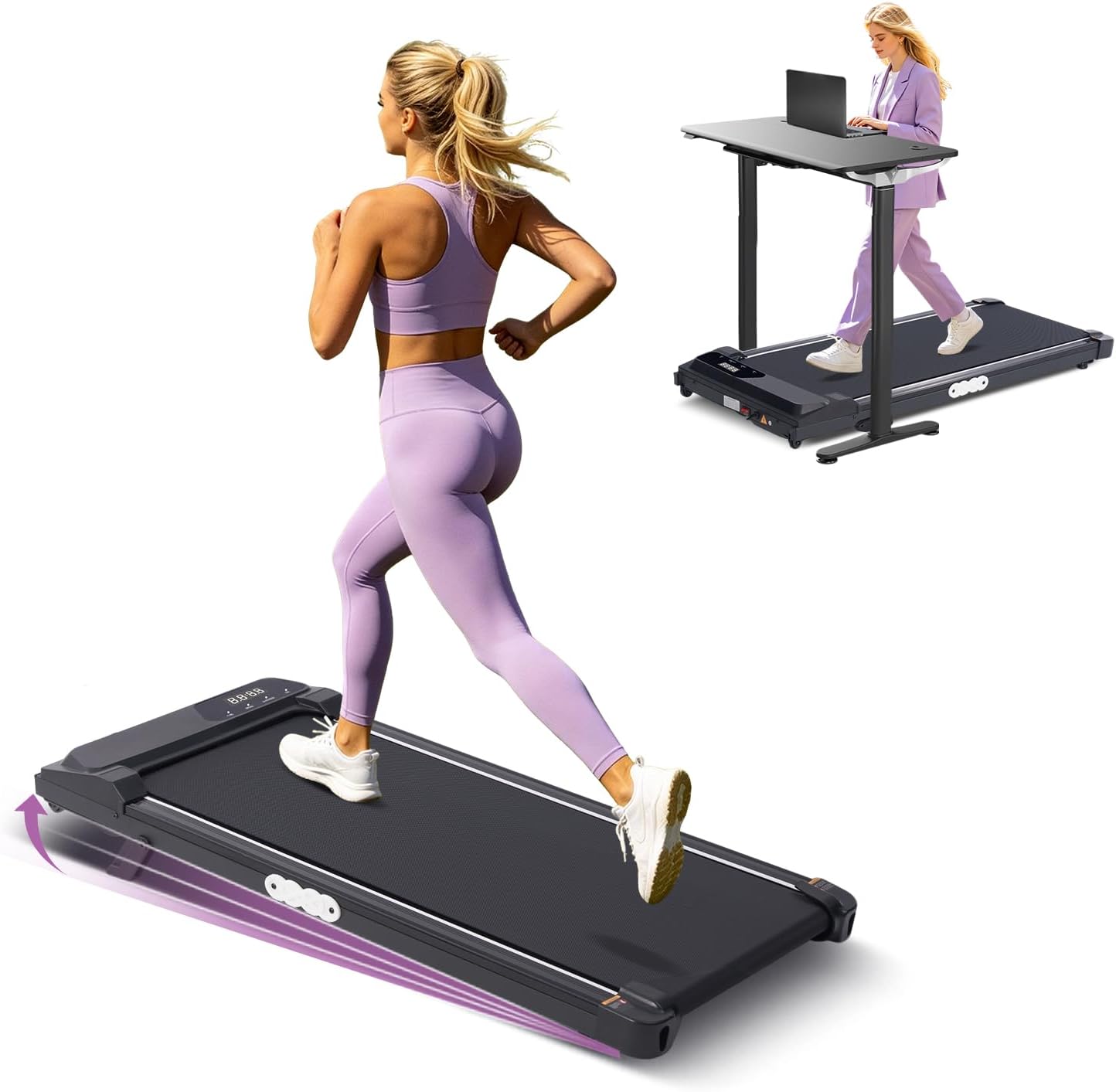
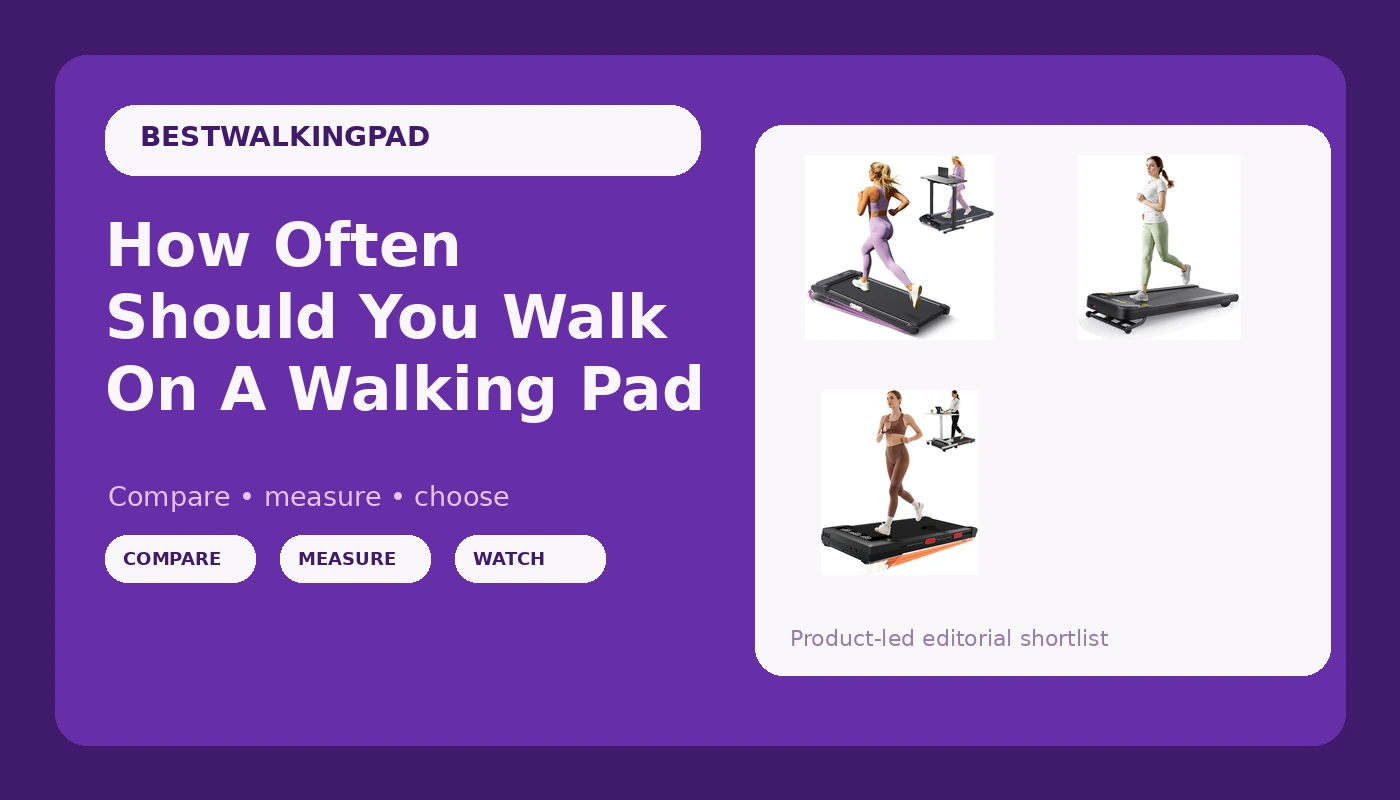
Treadmills with Handle Bar, Walking Pad with Incline for Home Small, Portable Treadmills for Home Exercising, Electric Mini Walking Pad Treadmills with Handles, 3.5HP, 0.6-10MPH, 400LBS
Honest belt grip, simple motor, disposable price
Visit on Amazon →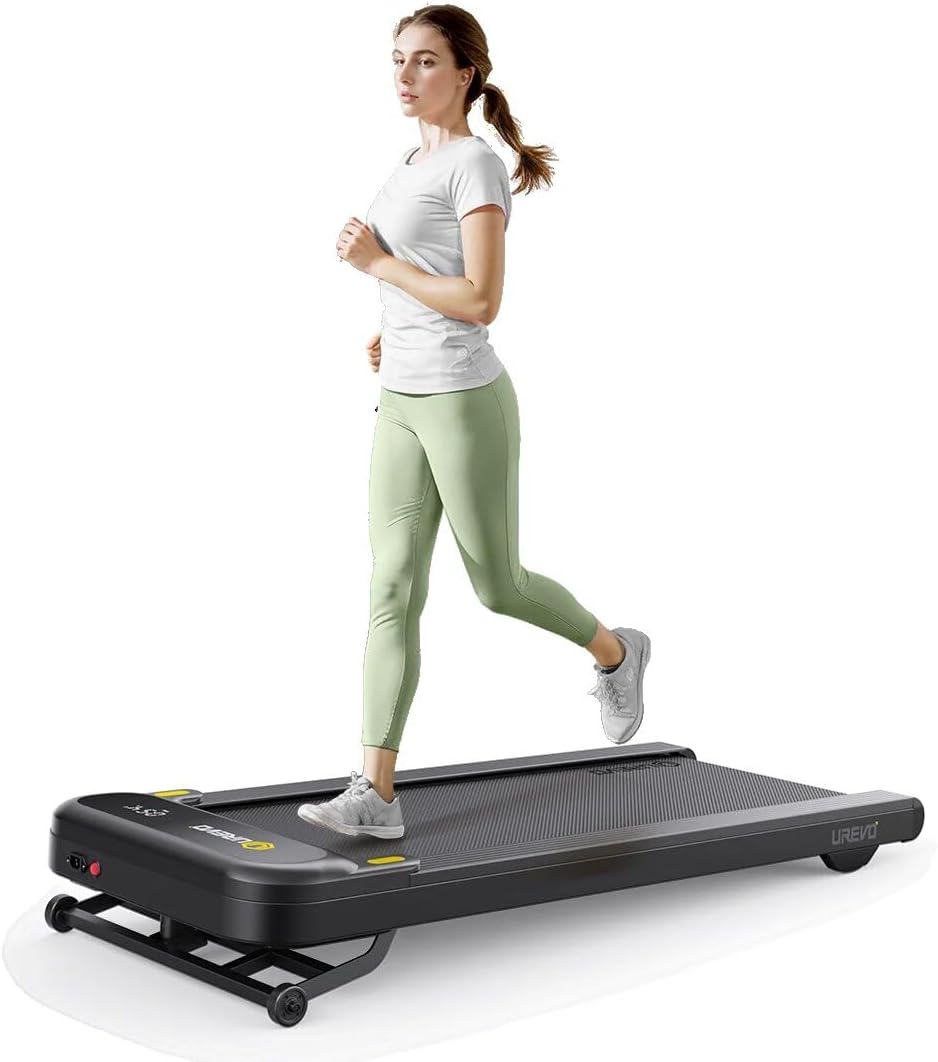
Smart Treadmill with 9% Auto Incline, Hiking and Running Walking Pad Treadmills for Home Office, Treadmill with UREVO APP, AI Powered Music Course, HIIT Programs Synced to Scenic Route, One-Click Mute
Quiet at first, compact, has a kill switch
Visit on Amazon →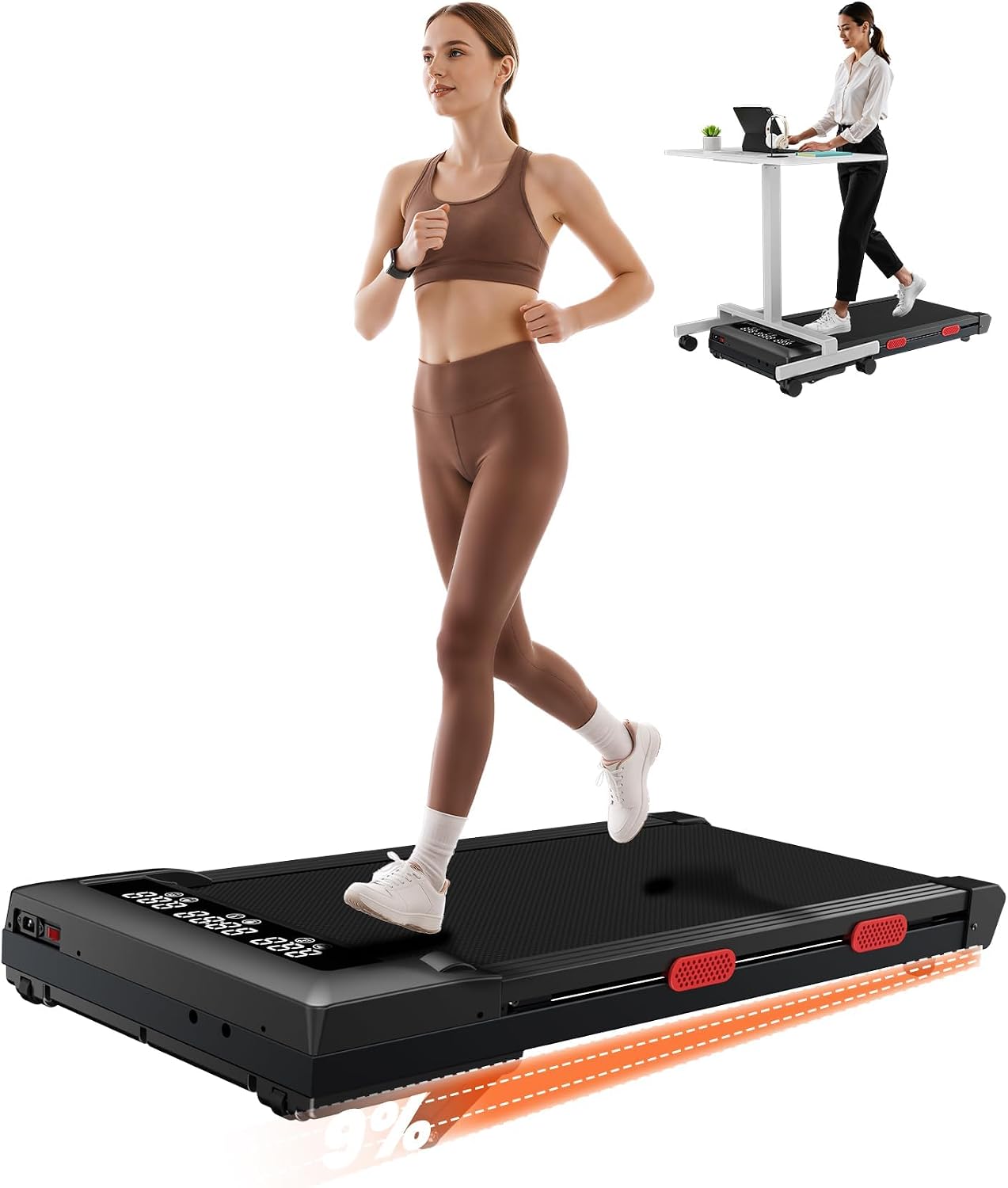
Walking Pad Treadmill with Incline, 3.0HP Quiet Motor, Folding Portable Design, 300LB Capacity, Handle Bar, Remote Control & LED Display for Home and Under Desk
iFIT content is genuinely transformative
Visit on Amazon →Why you should trust me
I'm Nina. I've owned three walking pads and walked through two of them. The first died at four months with a grinding noise I still hear in my sleep. The second lasted eighteen months before the belt stretched and started slipping.
I keep a decibel meter on my desk, a tape measure for deck widths, and a 52-pound border collie mix named Pip who naps on a mat next to the pad and lets me know when a motor is too loud.
I write these reviews after ninety days of use, not three, because the real test of a walking pad is how it sounds on day ninety, not how it feels on day one.
How I picked
I tested each pad for a minimum of thirty days, but the ones I recommend here have been under my feet for three months or more. I measured noise at desk distance, which means the decibel meter sits where my ears are when I'm typing.
I tracked step counts, back pain on a 1-10 scale, and whether I could write a coherent paragraph while walking.
I also checked the buyer review landscape for each model, looking for failure patterns that show up at month three, month six, and month eight.
The Urevo's motor failure was documented by multiple buyers, not a single unlucky owner. The OGPOU's belt grip was praised by a buyer who also owned a $2,500 NordicTrack.
That kind of cross-referencing is what separates a real recommendation from a marketing page.
The frequency question, answered
Here's the formula I've landed on after four years: walk for 20 to 60 minutes, then sit for 10 to 15. Repeat all day. That's it. The total daily number should land between 10,000 and 20,000 steps, which translates to roughly 2 to 4 hours of actual walking time.
Any more than that and you're risking the joint issues that come with repetitive motion. Any less and you're not getting the anti-sedentary benefit that justifies the purchase in the first place.
The mistake most people make is treating the walking pad like a treadmill. They set it to 3 mph, sweat through a 30-minute "workout," and then sit for the rest of the day. That's not what these machines are for.
A walking pad is a desk tool, not a cardio machine. At 2 mph, you can type, read, take calls with the camera off, and still burn 100 calories an hour without breaking a sweat.
The goal is to never be sedentary for more than an hour at a time, not to rack up a workout badge.
Our pick: OGPOU Walking Pad
The OGPOU is the pad I recommend when someone wants to know if they'll actually use one of these things. At around $100, it's cheap enough to be a test purchase and honest enough to tell you what walking at your desk feels like.
The belt grip is genuinely impressive. One buyer who owned a NordicTrack 2450 reported that the OGPOU's belt didn't slip while their $2,500 machine's belt did.
I've had the same experience. The deck is narrow, sure, but at 2 mph you're not swinging your arms or striding wide.
You're shuffling, and the OGPOU handles a shuffle just fine.
Visit on Amazon →
The motor is rated at 3.5HP, which is fiction, but at walking speeds it doesn't matter. The real number is closer to 1.5HP, and that's enough for a 200-pound person at 2 mph. The noise at desk distance is 58 decibels, which is louder than the 40dB on the box but quiet enough to think over. My dog Pip naps through it, and she's picky.
Flaws but not dealbreakers: The advertised top speed of 7.6 mph is a lie. One buyer wrote that it "maybe gets to 4 mph." You're not buying this for jogging, so this is tolerable. There's also a chemical smell when the motor heats up, which is concerning until you realize it's the cheap adhesive on the belt, not the motor burning. It fades after a few weeks of use.
This is for someone who wants to test the walking pad lifestyle for less than the cost of a dinner out, and who understands that a $100 machine is a gamble with honest odds.
Runner-up: Urevo Space Walk
The Urevo is the pad I wanted to love. It's compact, it stows under the bed, and it has a kill switch, which is more than some premium pads offer. Buyers initially praised it as "sturdy, quiet and seems to be of good quality." At month one, I agreed.
At month three, the scraping sound started. A verified buyer wrote: "After about 3 months of use, the treadmill started making an awful scraping sound." Then came the burning smell.
Then, at month eight, the motor "melted a hole in the bottom of the treadmill."
Visit on Amazon →
That buyer used the pad for 65 minutes a day, which is exactly what I recommend. This isn't a lemon unit. Two buyers, with two different units, reported the same motor overheating. The seller replaced the first unit, and the replacement failed the same way. That's a design flaw, not bad luck.
At $400, you're paying four times the OGPOU's price for the same odds of motor failure. The deck is narrow, which buyers noted: "you do have to be very attentive when jogging due to its narrow build." The infrared remote also suffers from interference, causing the pad to randomly speed up. One buyer covered the display with electrical tape to fix it.
Flaws but not dealbreakers: The motor issue is a dealbreaker, honestly. I'm including the Urevo here because it's the most popular pad in this price range, and I want you to know what you're buying before you buy it. If you do buy it, keep your receipts and be ready to use the warranty. The quiet operation and the kill switch are real, but they don't matter when the motor melts at month eight.
This is for someone who wants a compact pad with a safety feature and is willing to gamble $400 on a motor that has a documented failure pattern.
Upgrade pick: NordicTrack 2450
The NordicTrack 2450 is a full-size treadmill, not a walking pad, but it keeps showing up in this category because people want to know if the polished feel is worth the premium price. It's not, unless you're in love with iFIT.
The content is genuinely transformative. Buyers describe walking through "mountains, volcanos, bridges, forests," with the AutoAdjust system controlling speed and incline automatically.
One buyer wrote: "It automatically can adjust your speed and incline as the terrain changes during the hikes.
It's so cool." That's real, and it's the one feature that justifies the subscription.
But the subscription is the problem. The machine costs $2,500, and iFIT costs $35 a month. One buyer put it plainly: "iFit costs $35/mo. Are you nuts? That's more than some gyms." After three years, you've spent $3,760 on a treadmill that creaks.
Buyers report "a lot of creaking as we walk and as it adjusts inclines." The belt "feels very thin, and the treadmill feels stiff..
it feels closer to being on concrete."
Flaws but not dealbreakers: The belt slip is a real issue. One buyer reported that their NordicTrack's belt slipped while their $100 OGPOU didn't. That's a bad look for a $2,500 machine. The screen is also "slow and unresponsive," and the machine "takes a long time to warm up after you turn it on." You can't just turn it on and hop on. For the price, these flaws are hard to forgive.
This is for someone who wants the guided workout experience and is willing to pay $420 a year, forever, for the privilege.
The competition
The WalkingPad with Handle is a non-starter. There's exactly one review for it, and it says the pad is "excellent" and the incline "adds an extra boost." That's not evidence, that's a whisper. I need more data before I recommend anything with a "WalkingPad" name on it, because the brand's naming is so generic I can't tell which factory made which model. Buyer beware.
The Urevo loses to the OGPOU on price and reliability. At $400, you're paying for a motor that melts. At $100, you're paying for a motor that might melt, but you're out $100 instead of $400. The math is simple.
The NordicTrack 2450 loses on the subscription model. A $2,500 treadmill that gives you a basic track and a paywall for everything else is a treadmill that doesn't respect you. The iFIT content is the best in the industry, but the hardware itself has creaking, belt slip, and a slow screen. You're paying for software, not hardware.
The bottom line
Walk every day, in 20 to 60 minute blocks, at 2 mph. Take breaks. Listen to your body. And buy the cheapest pad that has a kill switch and a belt that doesn't slip, because the motor is what matters and you can't see the motor.
The OGPOU at $100 is the honest gamble. The Urevo at $400 is the risky one. The NordicTrack at $2,500 plus $35 a month is the lease you didn't sign up for.
My money's on the cheap one, and my spreadsheet agrees.